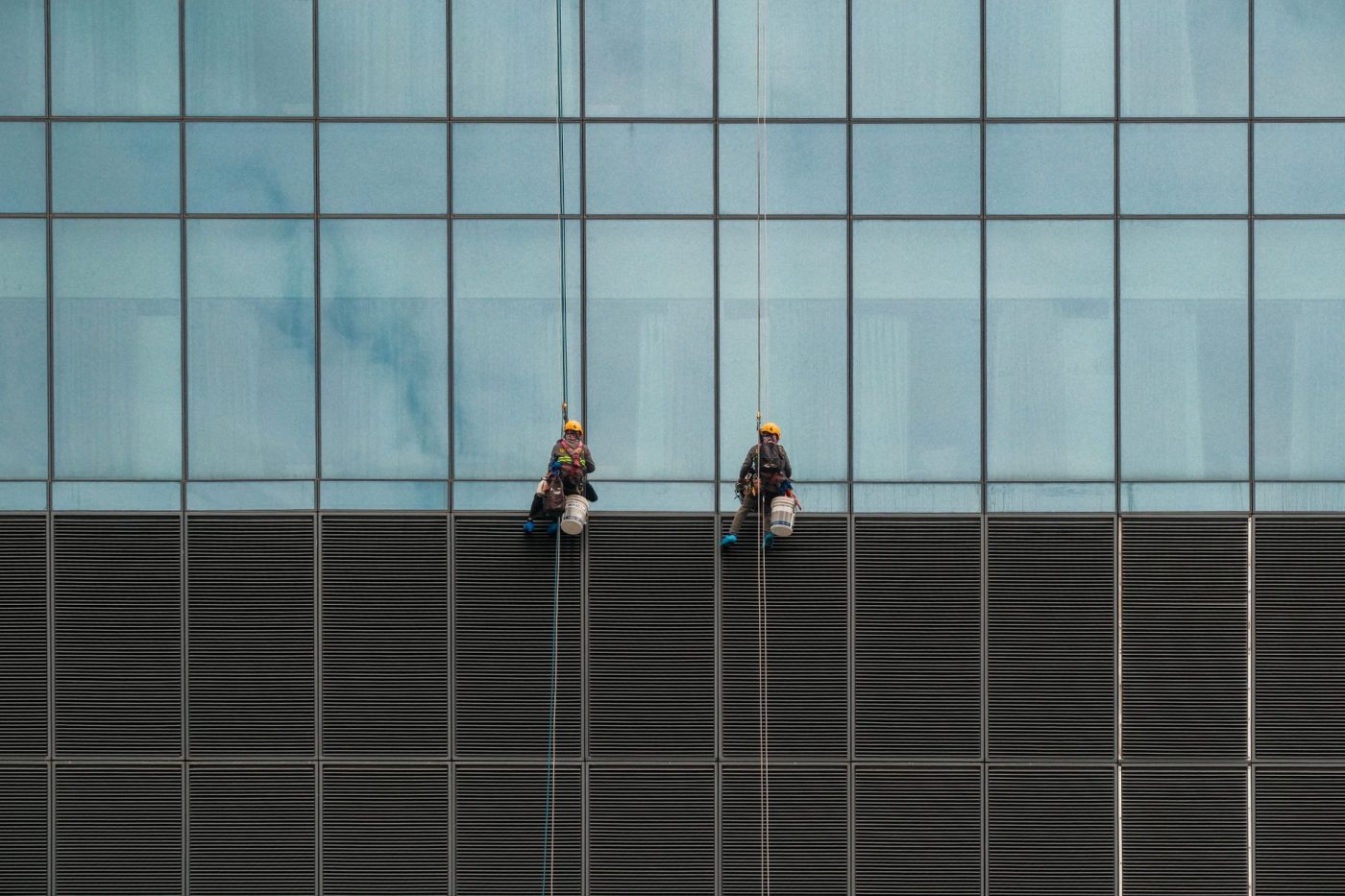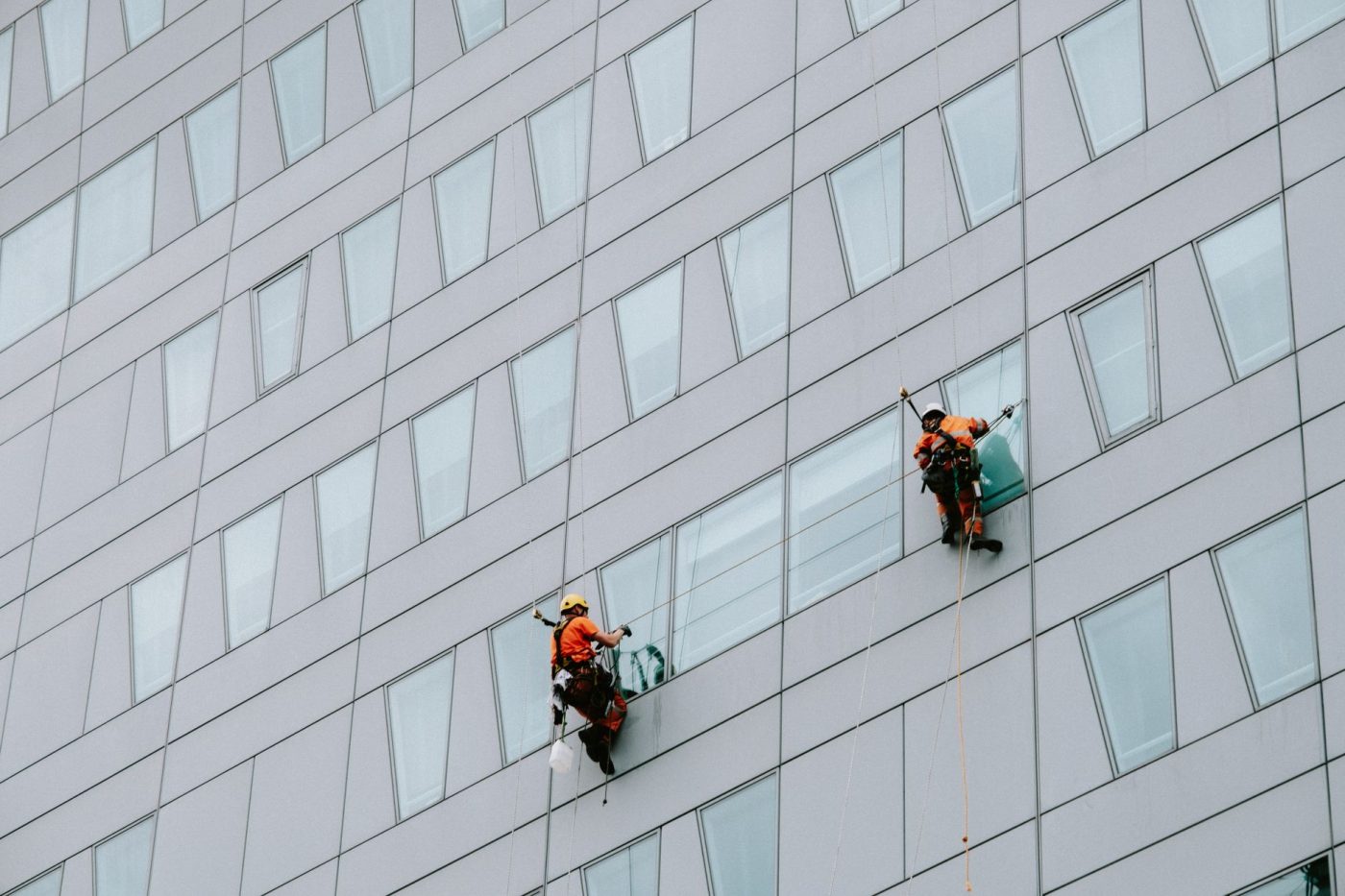
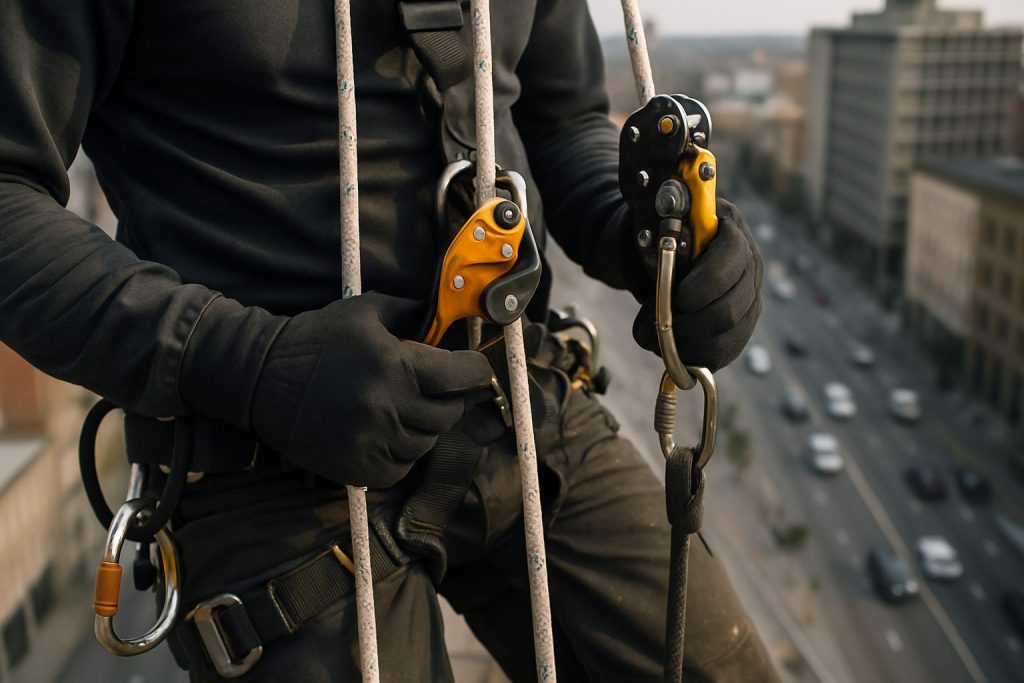
Rope access is a way of reaching a building from above, on ropes, under controlled tension - and it is safe when it is done properly. Every technician hangs on two independent ropes: a working line they descend on, and a separate safety line with a fall-arrest device on it. Certification (IRATA), rated equipment to AS/NZS 1891 and a written plan for the specific building are what turn it from climbing into a trade.
That is the short answer. The longer one is worth reading if you are the person signing off the job.
Two ropes, doing two different jobs
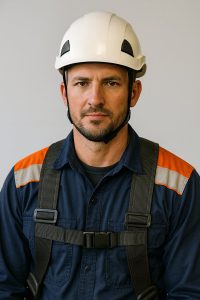
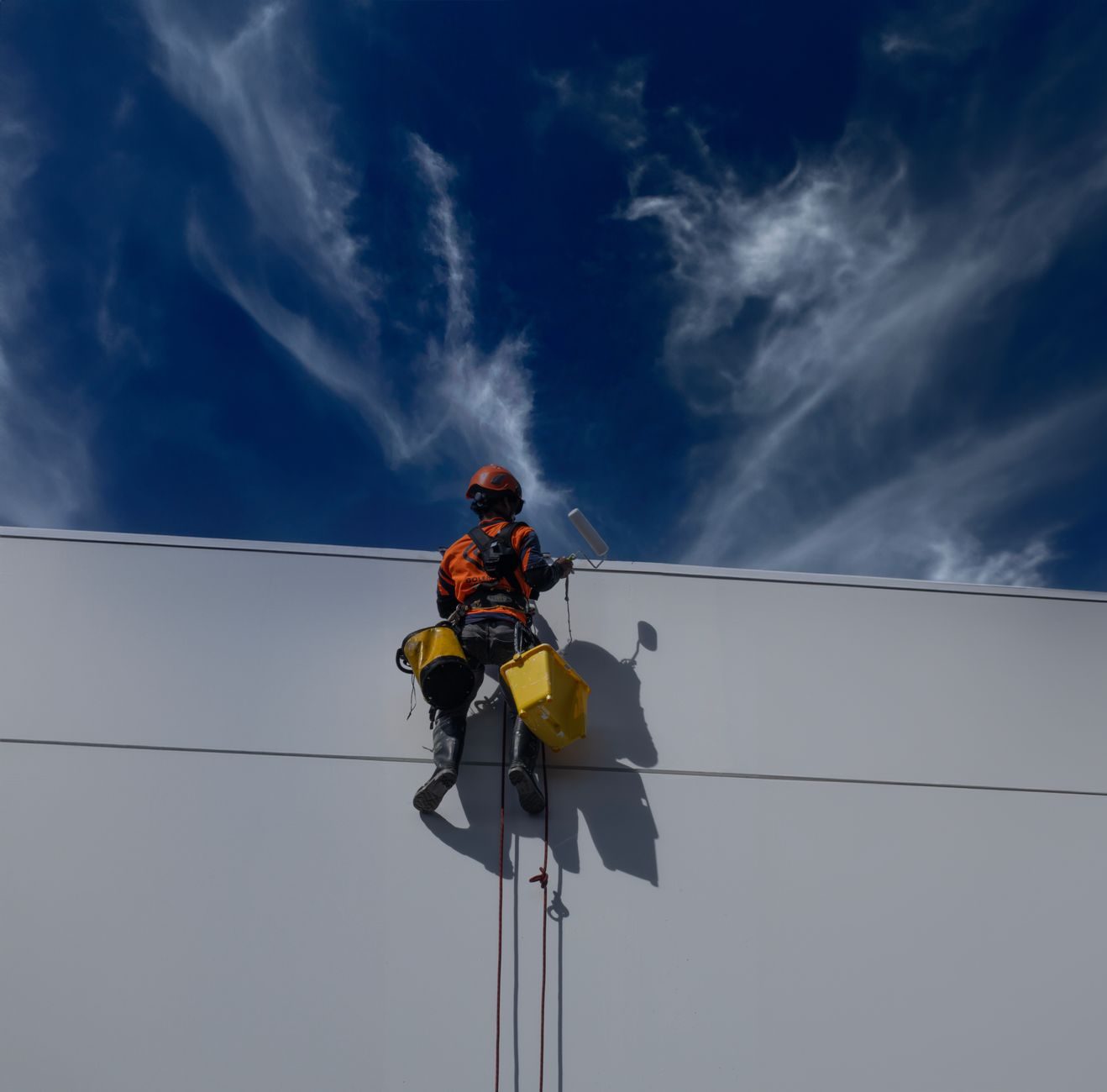
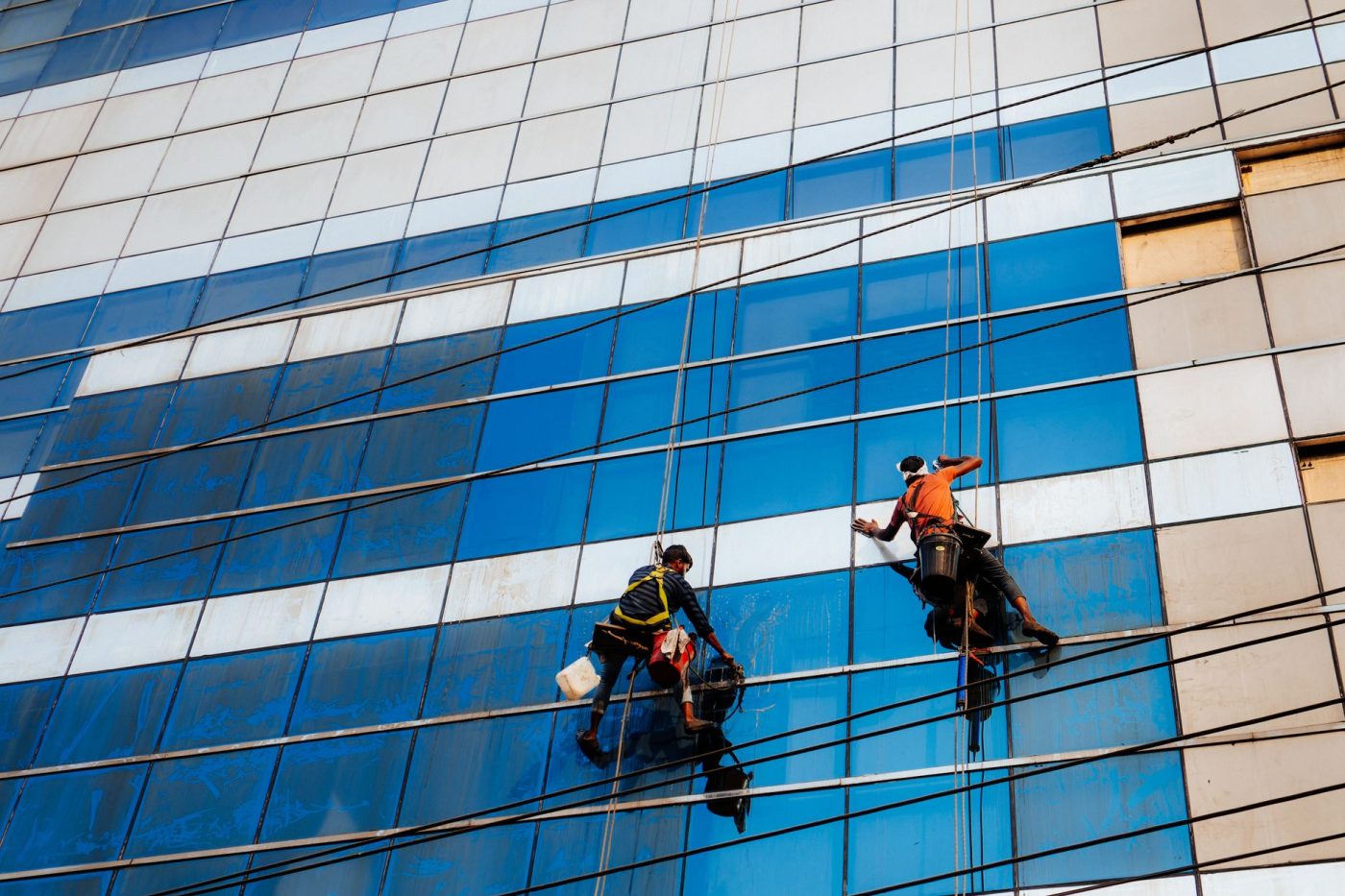
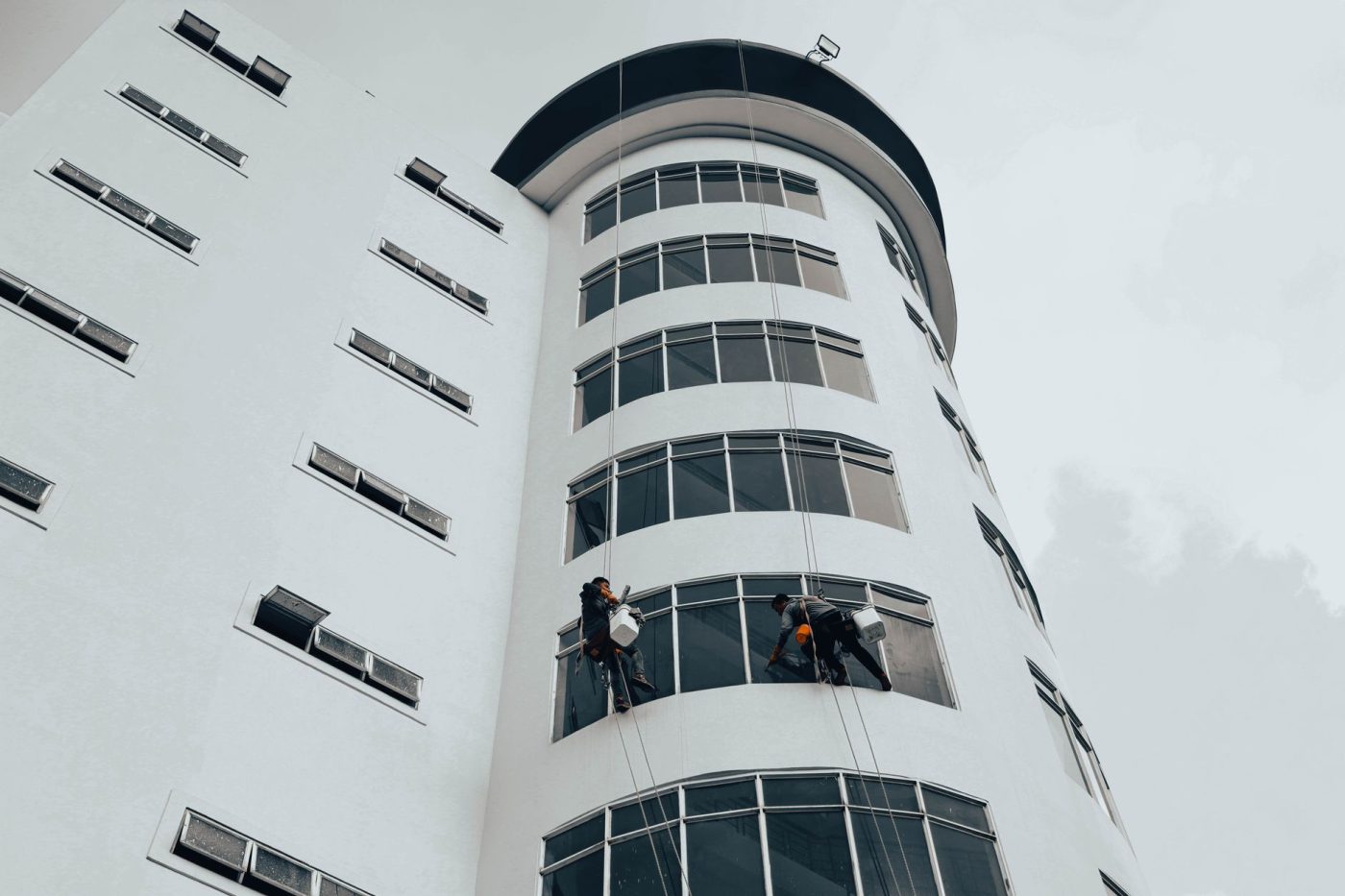
The technician wears a full-body harness. The working line runs through a descender they control with one hand. The safety line runs through a device that locks automatically if the working line fails or if they lose control of the descent. Neither line depends on the other, and that independence is the whole safety argument.
The ropes are the easy part. Anchors are where jobs go wrong. A rope is only as good as the thing it is tied to, so anchors are inspected before every shift - engineered roof anchors, a rated structural point, a steel beam that has been checked rather than assumed. On an older block or a shopfront parapet, a technician who refuses to rig off cracked concrete or a rusted bracket is not being difficult. That refusal is the safety system working.
Weather is the third variable, and in Melbourne it is not a small one. A written method statement sets the wind speed and rain conditions at which work stops for that particular facade. Almost nothing on a building is urgent enough to argue with a south-westerly.
What the IRATA levels actually mean
IRATA - the International Rope Access Trade Association - certifies technicians at three levels, and the difference matters when you are reading a quote.
- Level 1 works on ropes under supervision, performing set tasks.
- Level 2 has substantially more logged hours, rigs more complex systems and can carry out rescues.
- Level 3 writes the work plan, supervises the site and is responsible for rescue capability.
On anything beyond straightforward cleaning, a Level 3 should be on site rather than on the phone. Ask to see current cards - they carry photographs and expiry dates, and a legitimate contractor will hand them over without a fuss.
The line between rope access and industrial abseiling is mostly one of scope. Same safety system, different work: abseiling usually describes larger vertical surfaces, repairs and coatings rather than inspection or cleaning.
Compared with scaffolding, honestly
No access method cancels gravity. What differs is how long people are exposed and how much of the risk is engineered out beforehand.
Rope access keeps exposure short. A balustrade repair might mean two hours on the ropes and then everyone is back on the ground. Scaffolding, by contrast, stands for weeks - through storms, through the public walking underneath, past balcony doors that residents open because it looks like a floor out there.
Rope access also leaves nothing behind at street level: no hoarding, no permit for a footpath closure, no structure for anyone to climb at night. Against that, ropes are weather-sensitive in a way scaffolding is not, and there are jobs - a full facade repaint over six weeks - where a scaffold is simply the right tool.
Incident rates published by IRATA for rope access work are low relative to traditional access methods, but they are recalculated each year. If a contractor quotes a safety statistic at you, ask which year’s report it comes from.
Four myths worth dropping
“It’s dangerous - you’re just hanging off a rope”
You are hanging off two, each independently anchored, one of which locks on its own. The failures that do occur in this trade trace back to bad anchors, missing rescue plans and unqualified operators - not to ropes snapping.
“It’s slower than scaffolding”
For small and mid-sized jobs it is usually faster. A crew can be working within the hour. Scaffolding needs delivery, permits, assembly and then the same in reverse. For a Southbank balcony or a parapet inspection in St Kilda East, the scaffold is still being craned in while the rope job is finished.
“It’s only for towers”
Melbourne is full of two-storey terraces, low-rise blocks and shopfronts with a metre of side lane and a fence at the back. Scaffolding does not fit; a rope does. What decides the method is access geometry and anchor strength, not the number of floors.
“Anyone with climbing gear can do it”
Work at height is high-risk work under Victorian OHS regulations. The equipment has to meet AS/NZS 1891, the crew has to be certified, and there has to be a rescue plan that does not begin with dialling 000. Larger remedial work sits under industrial rope access solutions - a different scale of job from a weekend climber with a harness.
Six questions before anyone leaves the ground
Ask these in writing. The answers tell you more than the price does.
- Are all technicians IRATA-certified, and will a Level 3 be on site?
- Can you send a current certificate of currency for public liability insurance?
- Which anchors will you rig from, and what condition are they in?
- What are your wind and rain limits on this building?
- What is the rescue plan if a technician cannot descend under their own power?
- Which similar Melbourne buildings can you point to?
A quote with no method statement, no rescue plan and no certification behind it is not a cheaper version of the same service. Rope access is safe because it is systematic - and the paperwork is part of the system, not an add-on to it.
Frequently asked questions
Is rope access safe on a residential building?
Yes, when it is run by IRATA-certified technicians on a two-rope system with equipment to AS/NZS 1891. The working line and the safety line are independently anchored, so a failure on one is caught by the other. Ask for a site-specific method statement and rescue plan before work starts.
What qualifications should i ask a rope access contractor for?
Current IRATA cards for every technician, with a Level 3 supervising on site. Alongside that: a certificate of currency for public liability insurance, a Safe Work Method Statement written for your building, and a rescue plan. If any of the four cannot be produced, that is your answer.
What happens if a technician gets stuck on the rope?
Rescue is planned before the first descent, which is why a Level 3 is required on site. The supervisor can descend to a technician and lower them under control, without waiting on emergency services. Any contractor whose rescue plan is "call 000" has not met the requirement.
Can rope access damage the roof edge or facade?
Not when it is rigged properly. Rated edge protection goes anywhere a rope passes over a parapet, gutter or sharp edge, both to protect the rope and to spread load off the building. Improvised padding - a folded towel, a piece of carpet - is a sign to stop the job.