Rope access electrical services
Building partnerships, one call at a time.
Rope access electrical services: expert high-access electrical maintenance in Melbourne
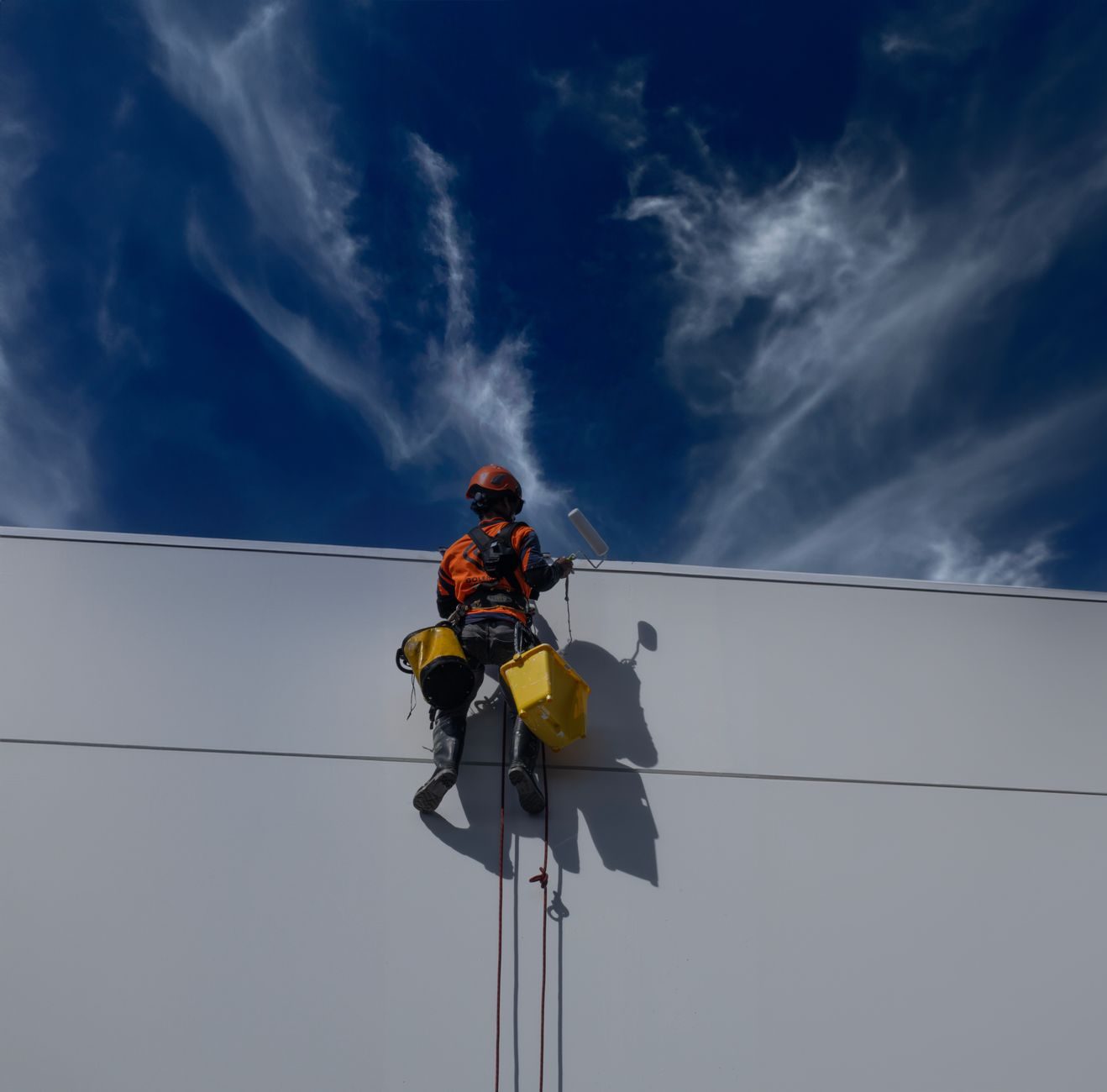
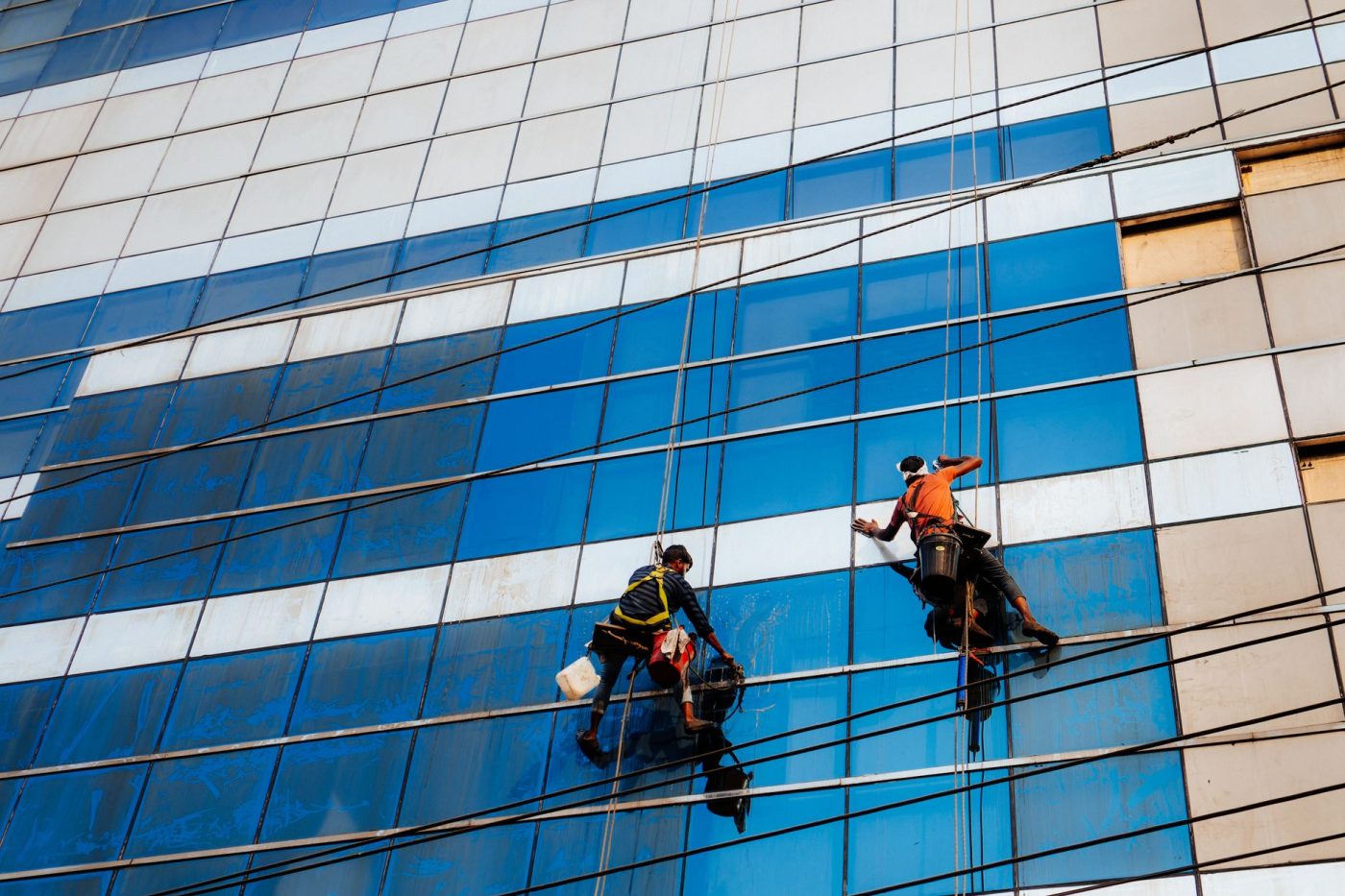
Some electrical faults sit in the hard parts of a building to reach: exterior and facade lighting, signage wiring, the cabling and isolators on a rooftop solar system. Rope access electrical work is how a technician finds and fixes those, off ropes, on the parts of a commercial or industrial building where scaffolding is not an option.
It takes both trades at once, electrical and rope access, because the job carries two hazards, the electricity and the fall. Our technicians are trained to work safely around live equipment and at height, to Australian rules.
What we work on
- Solar systems: the electrical side of a solar clean or service, where older arrays can have exposed cabling or a faulty isolator box that is a fire or shock risk. We run annual visual inspections for degraded cables and damage, and a broken cable-access seal we find can be the start of water getting into the electrics.
- Exterior lighting: repair and maintenance of facade lighting, navigational lights and illuminated signage at height.
- Faults in awkward spots: tracing and fixing electrical faults in hard-to-reach places, including water ingress in isolator boxes.
- Anchor integrity: the anchors the access hangs off are inspected and kept to Australian standards, since a compromised anchor is a risk to any work done off it.
Safety and Victorian OHS
Electrical work at height is high-risk construction work, so it runs to the Occupational Health and Safety Act 2004. A Safe Work Method Statement, covering the electric-shock hazard as well as the fall, is written for any work with a fall risk over two metres. Metal or metal-reinforced ladders are not used for live electrical work. Rope access is a Level 3 control, used where passive protection like scaffolding or an EWP (Level 2) is not practical, by IRATA/ARAA certified technicians trained in rescue.
What it costs
We quote on the job. The price moves on the height and how the access has to be rigged, the nature of the electrical work and the licensing it needs, the certified crew and safety documentation, and the timing if it runs after hours. Tell us the electrical job and where it sits on the building, and we will quote it.
Frequently asked questions
What qualifications do rope access electricians need
Technicians doing high-access electrical work must hold valid electrical trade licences alongside IRATA or ARAA rope access certifications. Rope credentials prove competence in working at height, rigging, and emergency rescue protocols. Teams must comply with Victorian OHS regulations and usually hold dedicated Working at Heights certificates to work safely at height on buildings.
How is electric shock risk managed during high-rise electrical work
Electrical hazards are controlled through a mandatory Safe Work Method Statement (SWMS) written before work begins. Control measures require non-conductive tools and non-metal access equipment around live installations. Hazardous tasks like arc welding or cutting are banned from ladders. All work complies with Safe Work Australia Model Codes of Practice for managing workplace electrical risks.
How do rope access electrical services fit Victorian fall prevention laws
Victorian fall prevention regulations classify industrial rope access as a Level 3 work-positioning control. It is used for high-rise electrical maintenance when Level 2 controls, such as scaffolding or elevating work platforms (EWPs), are not reasonably practicable. Building shape, height, or ground obstructions often make ropes the only practical option for reaching high electrical fittings safely.
Can rope access teams inspect high-rise rooftop solar panels
Rope access technicians inspect solar systems on high-rise roofs. They check for worn wiring, loose cabling, and failed seals around cable penetrations that create fire or electrocution hazards. Regular visual checks catch early wear, but trained height specialists are required to reach roof edges safely and inspect components like rooftop isolators and conduit runs.
What affects the cost of rope access electrical work in Melbourne
Pricing depends on access height and site complexity under Level 3 control rules. Costs reflect the specialized electrical licences needed, detailed SWMS documentation, and the time required to complete tasks safely. Rope access keeps down ground disruption and setup costs compared to heavy scaffolding and the work still meets Australian safety standards.
WHY US
What you get with every job
IRATA/ARAA-certified technicians on every job, with rescue and work-positioning competencies.
Rope access means no structure on the ground, no permits for hoardings and no closed footpaths.
Public Liability cover and WorkCover for every employee - details supplied with the quote.
You get a documented scope, a Safe Work Method Statement and a photo report on completion.
Our crews have worked on ropes since 2013, with more than 100 years of combined experience across the team - and every job runs to written contract terms.
What affects the price of rope access electrical services
Every building is quoted after we have seen it. These are the factors that move the number up or down - ask us about any of them and we will explain how they apply to your site.
| Height and access method | Rope access, elevated work platform or suspended platform - the method is chosen for the building, and it sets the crew size and setup time. |
| Surface area and condition | Heavy soiling, salt, traffic film or construction residue take longer and need specialised products. |
| Facade complexity | Recesses, angled or domed glazing, tight gaps between buildings and heritage detailing all slow the descent down. |
| Access and anchor points | Buildings with certified anchor points are quicker to set up. If there are none, temporary systems or installation are quoted separately. |
| Scheduling | Work outside trading hours, staged access or occupied tenancies affect the programme. Regular maintenance cycles are cheaper per visit than one-off jobs. |
Quotes are free and carry no obligation. Where the work is subject to a compliance requirement, the quote states which standard it is carried out to.
Suburbs we cover
We work across greater Melbourne - from CBD towers to bayside and outer-suburban sites. If your suburb is not on the list, ask anyway: our crews travel across the metropolitan area and regularly work in regional Victoria.
Aberfeldie · Airport West · Armadale · Balaclava · Balwyn · Beaumaris · Bentleigh · Bentleigh East · Blairgowrie · Brighton · Brighton East · Brunswick · Carnegie · Caroline Springs · Caulfield · Caulfield North · Caulfield South · CBD · Chadstone · Coburg · Dandenong · Daylesford · Eltham · Elwood · Essendon · Footscray · Frankston · Gardenvale · Gisborne · Glenbervie · Glen Iris · Glenroy · Greenvale · Hampton · Heidelberg · Hillside · Ivanhoe · Keilor · Kew · Lilydale · Lower Plenty · Malvern · Malvern East · Maribyrnong · Melton · Moonee Ponds · Northcote · Oakleigh · Oak Park · Officer · Ormond · Parkville · Pascoe Vale · Port Melbourne · Prahran · Preston · Reservoir · Rye · St Kilda · St Kilda East · Strathmore · Sunbury · Sunshine · Taylors Hill · Toorak · Tarneit · Wantirna · Werribee · Williamstown
FROM SITE
Recent work & articles

Who pays for balcony repairs in a Victorian owners corporation
Balcony repair costs in a Victorian owners corporation are split according to the lot’s boundary, not the building’s structure. This article explains the two main rules that decide who pays, how to check your plan of subdivision, and what to do when the answer is not clear.
What documents a contractor must give you after height work
After rope access or facade work on your building, the contractor owes you a set of documents, not just an invoice. This guide lists each one, what it should contain and what to do if it never arrives. Keep it with your owners corporation records so the next contractor and the next committee can find it.
Gutter and roof cleaning before Melbourne storm season
Blocked gutters and a dirty roof cause most of the storm damage that ends up as a repair bill for owners. What the work costs, how long it takes on a tall building, and what happens if you leave it until the first October storm.

Builders clean before handover: what site managers get wrong
A builders clean is the last step before keys change hands, and it is where most handover delays start. This guide sets out what the clean must cover, what it typically costs in Melbourne, how long it takes and the mistakes that push the handover date back. You finish with a checklist you can put in front of the cleaning contractor before anyone signs off.

How often should a high rise facade be inspected
This guide gives you the inspection intervals that apply to Melbourne towers, what triggers an extra check, and what a facade inspection actually covers. You will also find what it costs and how to plan the spend.
Why cleaning your gutters and roof in winter saves your home come spring
Melbourne winter rain finds every blocked gutter. What clogged gutters do to a roof, when to clear them, and how the work is done safely at height.