Anchor point installation in Melbourne
An anchor point is what a fall-arrest or rope access system hangs off, so it is the one part of a height safety setup that cannot be got wrong. Anchor points are what arrest a fall, and falls are the biggest single hazard in work at height. We design and install them to Australian standards, and repair and recertify the ones already on a building.
Rope access is a Level 3 control and it leans entirely on the anchorage, so the rules around anchors are strict:
- The roof or structure an anchor fixes to is checked by a competent person as suitable to hold it.
- Every anchor is checked by eye before use.
- A fixed anchor in regular use is inspected by a competent person at least every six months.
- Any anchor found damaged is tagged and kept out of use until it is repaired and re-inspected as safe.
The same anchors carry fall-arrest and travel-restraint systems, which keep a worker back from an unprotected edge or stop a fall before it reaches the ground.
What we do
We install new anchor systems, repair and recertify existing ones, verify that the structure an anchor fixes to can actually hold it, and advise on the wider height safety setup a building needs. Our technicians are IRATA/ARAA certified and trained in rescue.
Safety and cost
Installing anchors is high-risk construction work, so a risk assessment and a Safe Work Method Statement are prepared before the job, and we carry $20 million Public Liability Insurance. Each job is quoted on the building. The price moves on the height and complexity, whether it is a new system or a repair and recertification, the certified materials and the competent-person inspection the standards require, and the safety documentation. Ask us to quote the anchor points. We install and certify them in the one visit.
Frequently asked questions
What are anchor points, and why are they essential for high-rise maintenance in Melbourne?
Anchor points are secure attachment points installed on buildings that are essential for supporting rope access for high-rise cleaning and maintenance tasks. They provide the reliable connections needed for high-access operations and are critical for enhanced safety and regulatory compliance with Australian height safety standards.
How often do anchor points need to be inspected and certified in Australia?
If permanently fixed anchorages are in regular use, they must be inspected by a competent person at least every six months. All anchorages must be visibly checked before use. If an anchorage is assessed as impaired, it must be tagged and not used until repaired and reinspected by a competent person.
What Australian regulations govern the installation of anchor points for rope access?
Anchor point installation is a form of construction work regulated by the Victorian OHS regulatory framework, including the Occupational Health and Safety Act 2004. Anchor systems must meet Australian safety standards. The work itself is a high-risk construction activity requiring a Safe Work Method Statement (SWMS) if there is a risk of a fall greater than two metres.
Can anchor points be installed on any part of a building structure?
Before installing an anchor, the roof or any building component it will attach to must be checked by a competent person. This step makes sure the anchor is strong enough to hold and keeps high-access work as safe as possible.
What are the risks of using non-certified anchor points or performing a DIY installation?
Using anchors that aren’t certified or trying a DIY setup is very dangerous. The safety of technicians depends on these points, and a failure could cause serious injury. Industrial rope access systems are Level 3 controls and should only be handled by IRATA/ARAA-certified personnel. A weak or faulty anchor puts everyone at risk and can violate OHS regulations, so having a professional do the installation is essential.
WHY US
What you get with every job
IRATA/ARAA-certified technicians on every job, with rescue and work-positioning competencies.
Rope access means no structure on the ground, no permits for hoardings and no closed footpaths.
Public Liability cover and WorkCover for every employee - details supplied with the quote.
You get a documented scope, a Safe Work Method Statement and a photo report on completion.
Our crews have worked on ropes since 2013, with more than 100 years of combined experience across the team - and every job runs to written contract terms.
What affects the price of anchor point installation
Every building is quoted after we have seen it. These are the factors that move the number up or down - ask us about any of them and we will explain how they apply to your site.
| Height and access method | Rope access, elevated work platform or suspended platform - the method is chosen for the building, and it sets the crew size and setup time. |
| Surface area and condition | Heavy soiling, salt, traffic film or construction residue take longer and need specialised products. |
| Facade complexity | Recesses, angled or domed glazing, tight gaps between buildings and heritage detailing all slow the descent down. |
| Access and anchor points | Buildings with certified anchor points are quicker to set up. If there are none, temporary systems or installation are quoted separately. |
| Scheduling | Work outside trading hours, staged access or occupied tenancies affect the programme. Regular maintenance cycles are cheaper per visit than one-off jobs. |
Quotes are free and carry no obligation. Where the work is subject to a compliance requirement, the quote states which standard it is carried out to.
Suburbs we cover
We work across greater Melbourne - from CBD towers to bayside and outer-suburban sites. If your suburb is not on the list, ask anyway: our crews travel across the metropolitan area and regularly work in regional Victoria.
Aberfeldie · Airport West · Armadale · Balaclava · Balwyn · Beaumaris · Bentleigh · Bentleigh East · Blairgowrie · Brighton · Brighton East · Brunswick · Carnegie · Caroline Springs · Caulfield · Caulfield North · Caulfield South · CBD · Chadstone · Coburg · Dandenong · Daylesford · Eltham · Elwood · Essendon · Footscray · Frankston · Gardenvale · Gisborne · Glenbervie · Glen Iris · Glenroy · Greenvale · Hampton · Heidelberg · Hillside · Ivanhoe · Keilor · Kew · Lilydale · Lower Plenty · Malvern · Malvern East · Maribyrnong · Melton · Moonee Ponds · Northcote · Oakleigh · Oak Park · Officer · Ormond · Parkville · Pascoe Vale · Port Melbourne · Prahran · Preston · Reservoir · Rye · St Kilda · St Kilda East · Strathmore · Sunbury · Sunshine · Taylors Hill · Toorak · Tarneit · Wantirna · Werribee · Williamstown
FROM SITE
Recent work & articles

Gutter and roof cleaning before Melbourne storm season
Blocked gutters and a dirty roof cause most of the storm damage that ends up as a repair bill for owners. Here are typical costs, how long the work takes on a tall building, and what happens if you leave it until the first October storm.
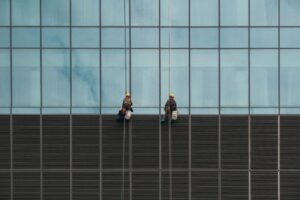
Builders clean before handover: what site managers get wrong
A builders clean is the last step before keys change hands, and it is where most handover delays start. This guide sets out what the clean must cover, what it typically costs in Melbourne, how long it takes and the mistakes that push the handover date back. You finish with a checklist you can put in front of the cleaning contractor before anyone signs off.
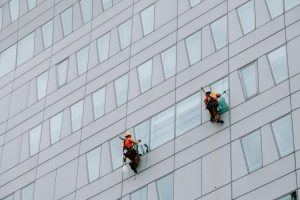
How often should a high rise facade be inspected
This guide gives you the inspection intervals that apply to Melbourne towers, what triggers an extra check, and what a facade inspection actually covers. You will also find what it costs and how to plan the spend.
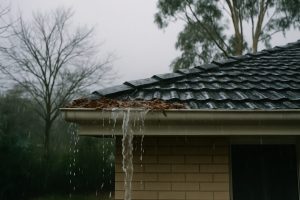
Why cleaning your gutters and roof in winter saves your home come spring
Melbourne winter rain finds every blocked gutter. What clogged gutters do to a roof, when to clear them, and how the work is done safely at height.
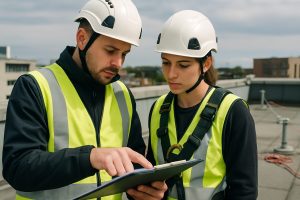
Twelve questions that separate a real height safety contractor from a cheap quote
Twelve questions to ask before accepting a height safety or rope access quote in Melbourne - and the answer to each one that should worry you.
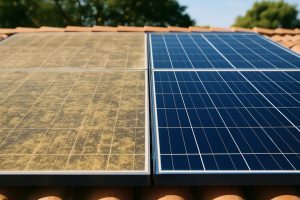
Does cleaning solar panels pay for itself in Melbourne?
Dirty solar panels cost Melbourne homes 5-20% output. See 6.6 kW calculations, AUD payback, and when cleaning is not worth it.