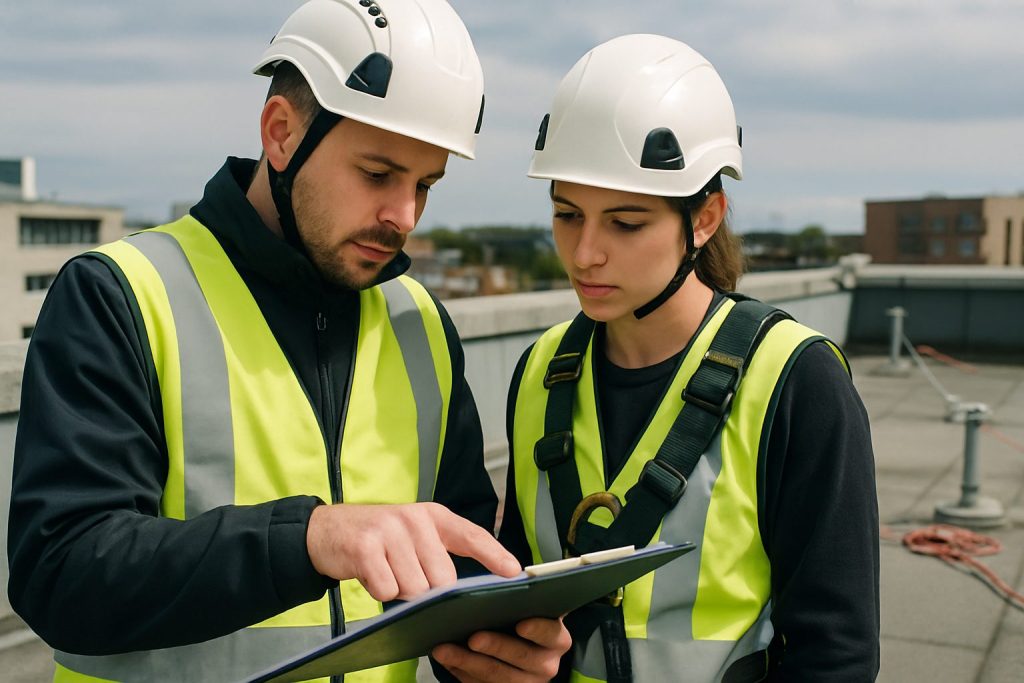
Two quotes for the same roof can differ by half, and the gap is almost never in the labour rate. It is in what the cheaper one has left out: the site visit, the named crew, the rescue plan, the anchor testing. None of that is visible on a one-page quote.
These twelve questions bring it into view. Each comes with the answer that should make you pause.
The paperwork
1. Can you show a current IRATA certificate for every technician attending?
Certification belongs to people, not companies. Ask for names, levels and expiry dates before the day.
Worry if: the office says “we’re IRATA” but cannot name who is coming.
2. Can you send a certificate of currency for public liability insurance?
It should name work at height or rope access specifically. Melbourne sites bring shared walls, glazing and public footpaths into the picture.
Worry if: the policy reads as general handyman cover - that is where claims get declined.
3. Will there be a safe work method statement for this building?
A real SWMS names your street, your roof type, your access points, your anchors and what happens in an emergency.
Worry if: what arrives is a generic PDF with “roof access” in the title and no address in the body.
4. Does the quote follow a site inspection?
Photos from the footpath do not show rot in a parapet, brittle flashing, a fragile skylight under a tarp, or an anchor that has never been tested.
Worry if: a firm price arrives over the phone. It will move once someone actually looks. Where the existing documentation is old or missing, height safety consultants can tell you what you are actually holding.
The people
5. What IRATA levels are on the crew?
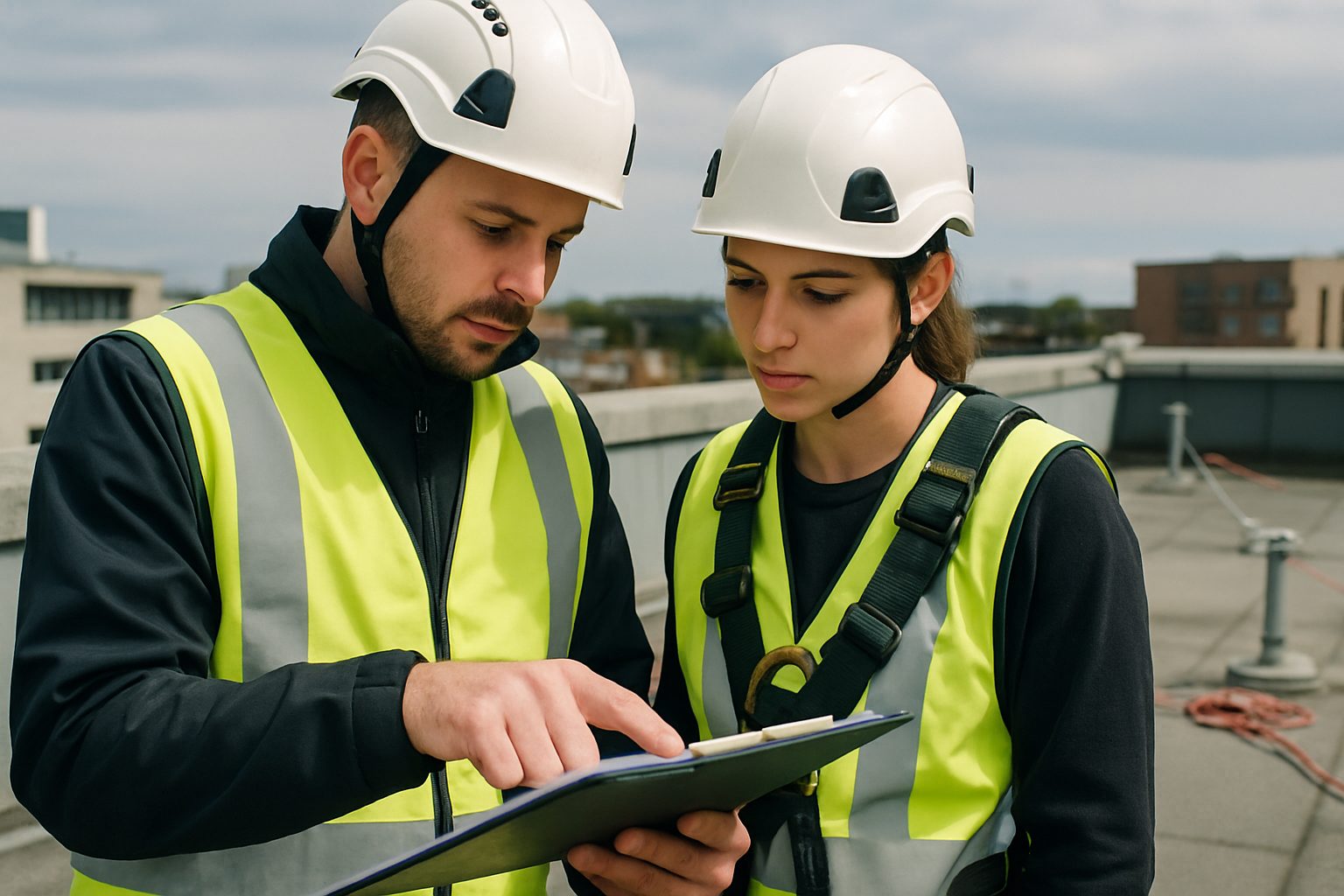
Level 1 works supervised. Level 2 rigs more complex systems and assists rescue. Level 3 supervises and owns the rescue capability.
Worry if: everyone is described as “fully trained” and no levels are given.
6. Who exactly is attending, and can i have the names beforehand?
A quote for two technicians occasionally arrives as one technician and a labourer who has never been on a rope.
Worry if: the contractor cannot say who is coming until the morning of the job.
7. Have they worked on this type of building?
Terracotta tile in Brighton, rendered brick in Fitzroy and decramastic in Ringwood all behave differently under a rope and a boot. Bayside exposure adds wind that arrives without much warning.
Worry if: the answer is “we’ve done hundreds of jobs” with no comparable building named.
8. Who runs the rescue, and how?
An IRATA crew must be able to recover a suspended technician themselves. Suspension trauma is measured in minutes, not the time it takes a truck to arrive.
Worry if: the plan begins and ends with “we call 000”.
The job itself
9. How is the price built, and what is inside it?
Fixed price is ideal. Day rates are fine where the scope genuinely is not known yet. Either way, ask where disposal, travel, parking and equipment sit.
| Work | Indicative range (AUD) | What moves it |
|---|---|---|
| Anchor point / roof access assessment | $450 - $900 | Roof type, access, depth of report |
| Roof anchor installation (engineering supplied) | $350 - $750 per anchor | Substrate, height, edge exposure |
| Small rope access repair or facade work | $900 - $2,500 per day | Crew size, access method, building height |
Indicative and site-specific.
Worry if: a quote sits well under the range with the same scope written on it. Something has been removed; find out what.
10. What happens when the weather turns?
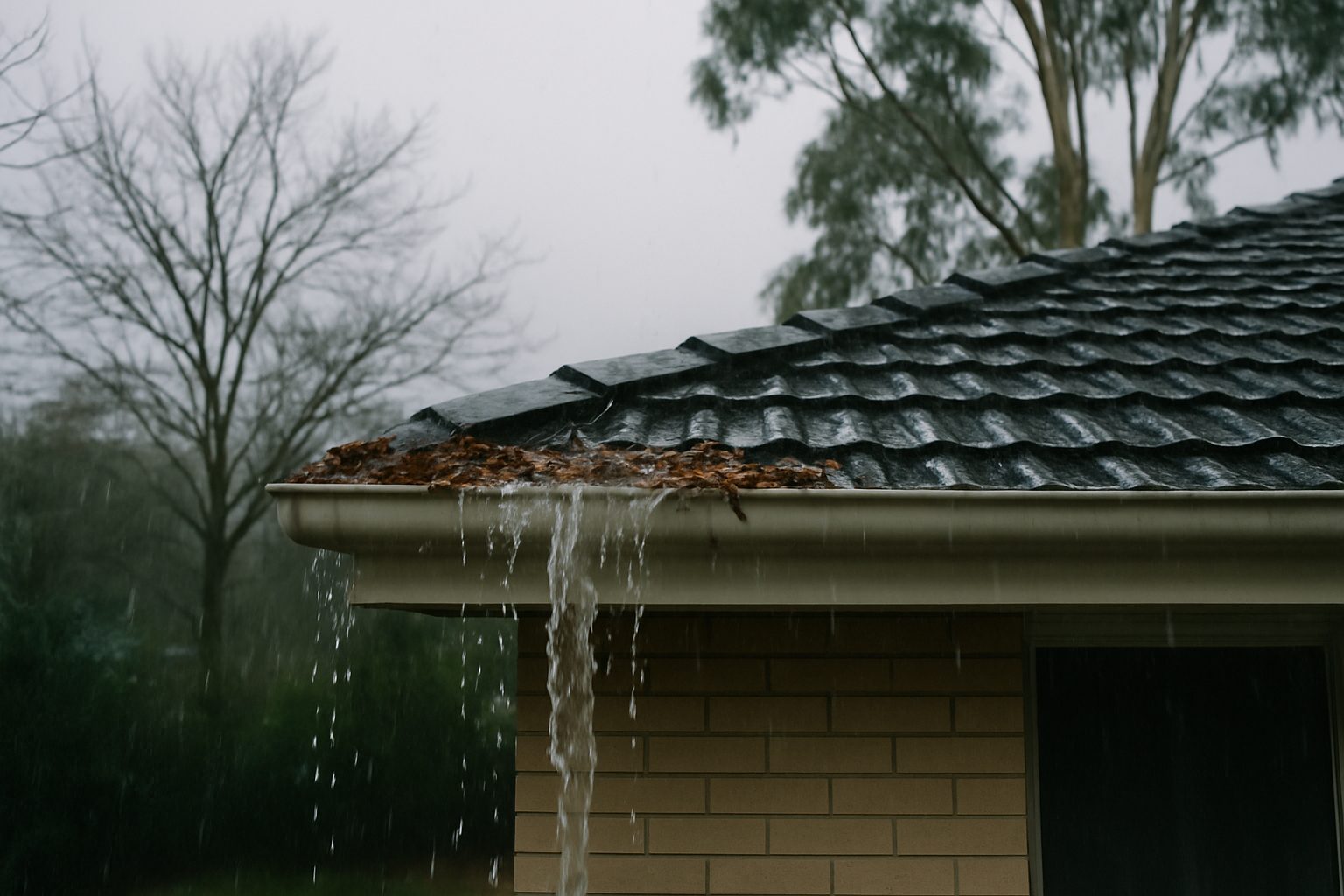
Wind stops rope work. Rain makes tile and metal roofs unusable. A contractor who works properly has a stated wind limit and reschedules without inventing a charge.
Worry if: you hear “we work in anything”, or there is a cancellation fee for a day the crew themselves called off.
11. Which anchors will you use, and how do you know they hold?
Australian rope access needs rated anchors or verified structural connections. Ask for load ratings, fixing details and test tags where they apply. WorkSafe Victoria issues notices over untested height safety systems.
Worry if: the plan involves roof hooks over a gutter and nobody mentions a rating.
12. Who cleans up, and what covers damage?
Old sealant, tile chips, packaging and rope bags should leave with the crew, and there should be a written make-good clause for anything broken.
Worry if: the response is that they are roof workers, not cleaners.
Why the cheapest quote often needs a second visit
The pattern repeats. A low number wins the job without a site inspection, so the crew arrives and finds an anchor nobody tested, a roof sheet nobody flagged, or a scope that never covered the actual defect. Work stops. The building manager then pays a second contractor to redo the access, redo the documents and finish the job - and by then the good crews are booked out three weeks.
The quote worth comparing is the one that already contains a named crew, a building-specific SWMS, rated anchors and a stated weather limit. That is not a premium version of the service. It is the service. If you want a like-for-like second opinion on a scope you already hold, get a quote and compare the documents line by line rather than the totals.
Frequently asked questions
Do i need rope access for a two-storey house, or will a ladder do?
A low-pitch roof with clear ground access can be ladder work. Steep pitch, fragile sheeting, no safe ladder footing or anything above two storeys pushes it into anchored work. The test is not the height - it is whether a fall is possible and what has been done to control it.
What does a height safety audit cost in Melbourne?
An anchor point or roof access assessment usually falls between $450 and $900, depending on roof type, access and how detailed the report is. More anchors or multiple buildings cost more. What you should receive is photographs, anchor ratings and a register you can hand to the next contractor.
What is the difference between IRATA level 1, 2 and 3?
Level 1 works on ropes under supervision. Level 2 rigs more complex systems and performs rescues. Level 3 supervises the site, writes the plan and carries responsibility for rescue. A crew without a Level 3 on site is not operating to standard practice, whatever the quote says.
Who pays if the job is cancelled for weather?
If the crew calls the day off before starting, you should not be charged for it. Confirm the wind limit and the cancellation terms in writing when you book, because "weather" is the most common place for an argument to appear on an invoice later.