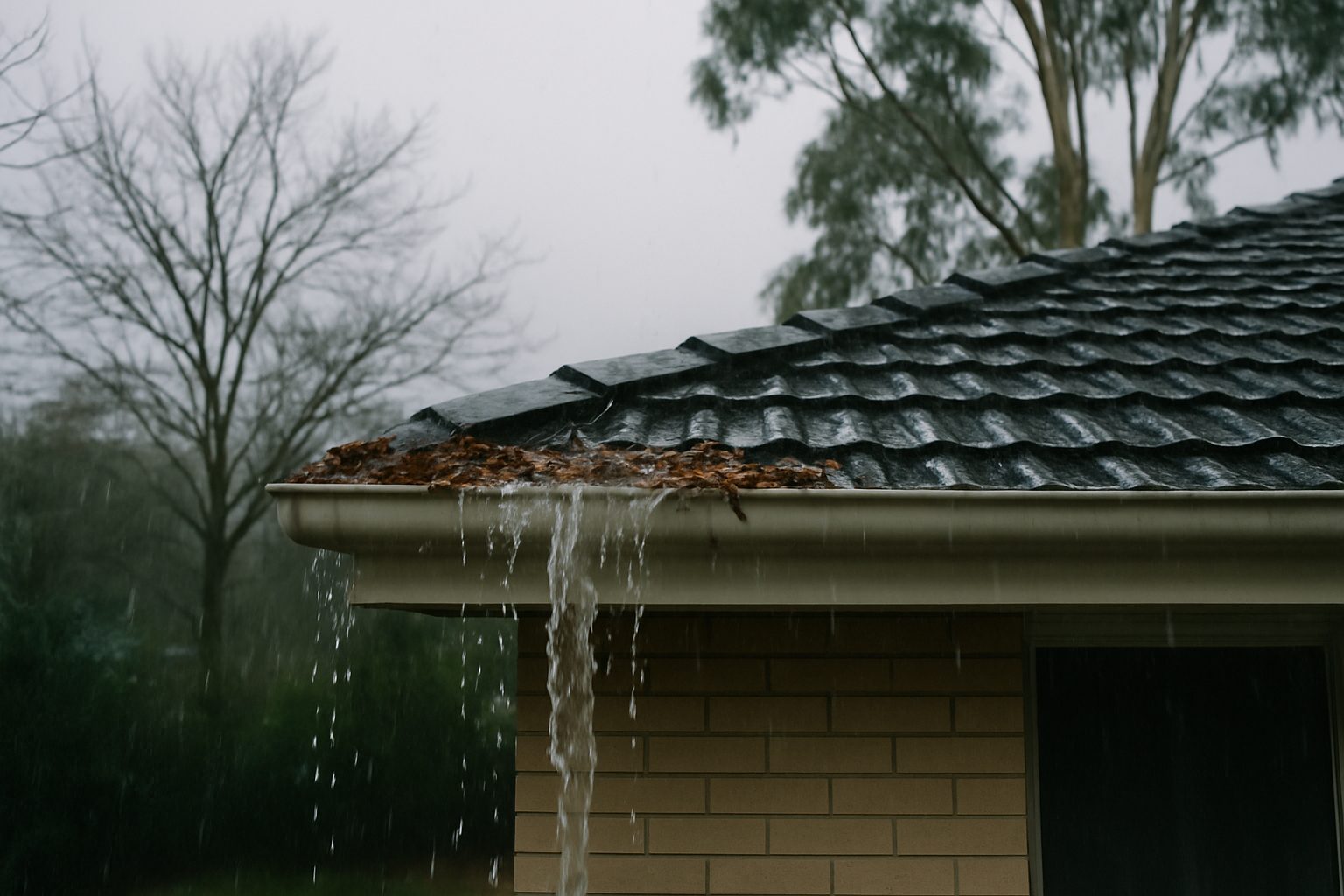
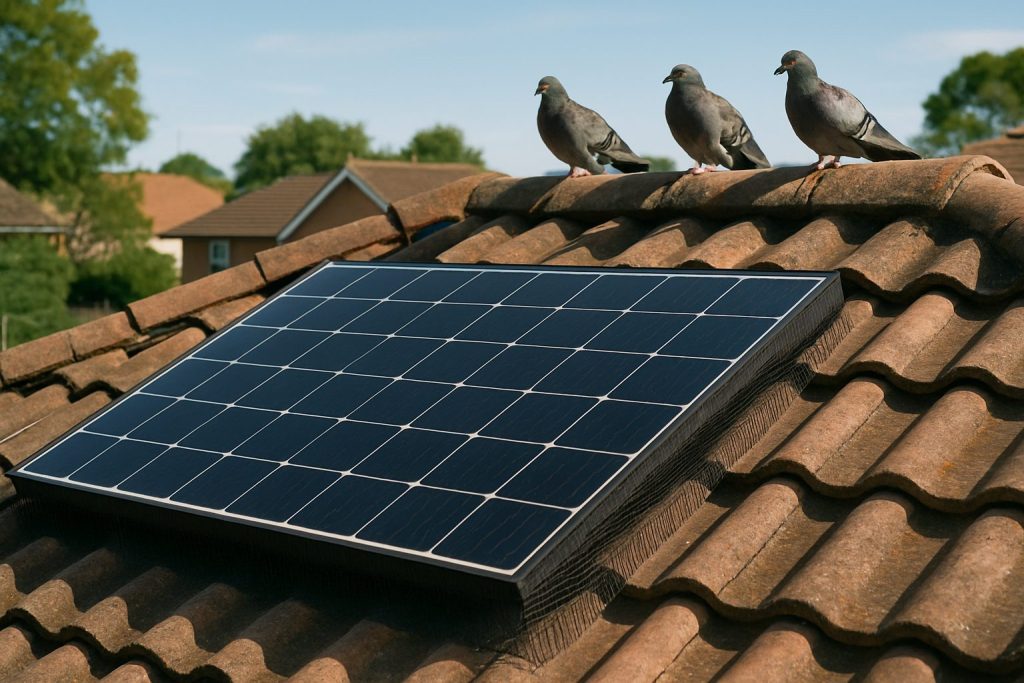
I see the same pattern every spring across Melbourne. A pair of pigeons finds the gap under a solar array, drags in twigs and grass, and coats the roof with droppings. By the first decent rain, gutters below the array clog. The acid in pigeon waste etches roof coatings, panel glass, and mounting rails.
Under the panels is worse. Birds peck foam pads around wiring, pull DC cable insulation, and shove conduit off clips. On older terracotta roofs, traffic and pecking loosen bedding mortar and crack tiles. A roof that sat quiet through winter in St Kilda East or Brunswick can turn into a roost by September.
Output drops fast. Droppings shade cells and create hot spots that knock back more production than the dirty patch suggests. On a string inverter, one fouled or damaged panel drags the whole string. Nests also trap heat under the array, which raises panel temperature and cuts efficiency.
What works on site (and what doesn’t)
No single fix suits every roof. I choose based on array height off the roof, tile or metal profile, gutter condition, and how heavy the pigeon pressure is.
Mesh skirt
A wire mesh skirt around all exposed edges is the standard retrofit. Stainless clips and UV-stable mesh last for years. Aluminium-coated steel mesh holds up better here than cheap PVC-coated wire in summer sun.
The weak points are corners and uneven tiles. If the mesh isn’t cut to match the roof profile, pigeons find a finger-width gap within days. On terracotta, a bad fit can chip tile edges or dam water. I fix to roof battens where possible, or use non-penetrating solar clips. I don’t drive self-tappers into panel frames - that cracks frames and risks the warranty.
Bird spikes
Spikes stop roosting on gutters, ridge capping, and signs. They don’t seal the panel-to-roof gap, so I use them as an add-on with mesh. A separate bird spike installation along gutters and fascia stops birds stepping onto the roof edge.
Cheap plastic spikes go brittle under UV. Steel spikes bend if they’re slapped on. Glue bases fail on dusty or mossy gutters unless we clean and dry the surface first.
Bird gel
Gel is a short-term repellent for ledges. Under Melbourne sun it picks up dust and pollen, then hardens or washes off after a summer or two. It doesn’t block access under panels, so it’s not a fix for nesting.
Perimeter netting
Perimeter netting can keep birds out of roof valleys or plant areas. Around solar, it’s bulky, catches leaves, and gets in the way of roof work. Too loose and birds tangle. Too tight and it pulls at fixings. A fitted mesh skirt is usually cleaner and easier to live with.
| Method | What it does | Limits | Indicative cost |
|---|---|---|---|
| Mesh skirt around solar array | Closes the panel-to-roof gap, blocks access | Needs exact fitting; poor clips fail on tile | $900–$2,500 for a typical 6 - 10 kW array |
| Bird spikes | Stops roosting on ledges, gutters, signs | Does not close under-panel gap; can damage roof if glued poorly | $20–$50 per metre installed |
| Bird gel | Makes surfaces tacky or uncomfortable | Fails in Melbourne heat; needs reapplication | $15–$35 per length, plus labour |
| Perimeter netting | Blocks access to roof valley or plant area | Traps leaves; complicates roof access | $600–$1,800 depending on area |
These figures are indicative market ranges only, not a quote. Final cost depends on roof pitch, tile type, array size, access, and how much waste we have to remove.
Clean first, then seal
If you cap fresh droppings under mesh, the acid keeps eating the roof and mounts. Dead birds, mites, and nesting left inside create a health risk. A dirty array also keeps running below par even after you block access.
Book a solar panel cleaning before the barrier goes on. I start by lifting debris from under edges I can safely reach, bagging nests and feathers. Then a cleaning pass to remove droppings, leaf litter, and any baked-on patches. Once the panels and roof surface are clean and dry, I fit mesh tight to a smooth edge so pigeons can’t pry it back.
On roofs with years of baked-on guano, we add a manual scrape and rinse. On tile, I work from the ridge or on ropes to avoid point-loading and cracked tiles. Under WorkSafe Victoria, we attend to a safe work method statement (SWMS) for roof access and bird waste handling.
Warranty and safe access
Bird proofing doesn’t void a panel warranty when it’s done without drilling frames or crushing them with the wrong clamps. Overheating can also be grounds for a knockback if a barrier blocks airflow, so I keep clearances per the panel installation manual. Check your model’s guide before we start.
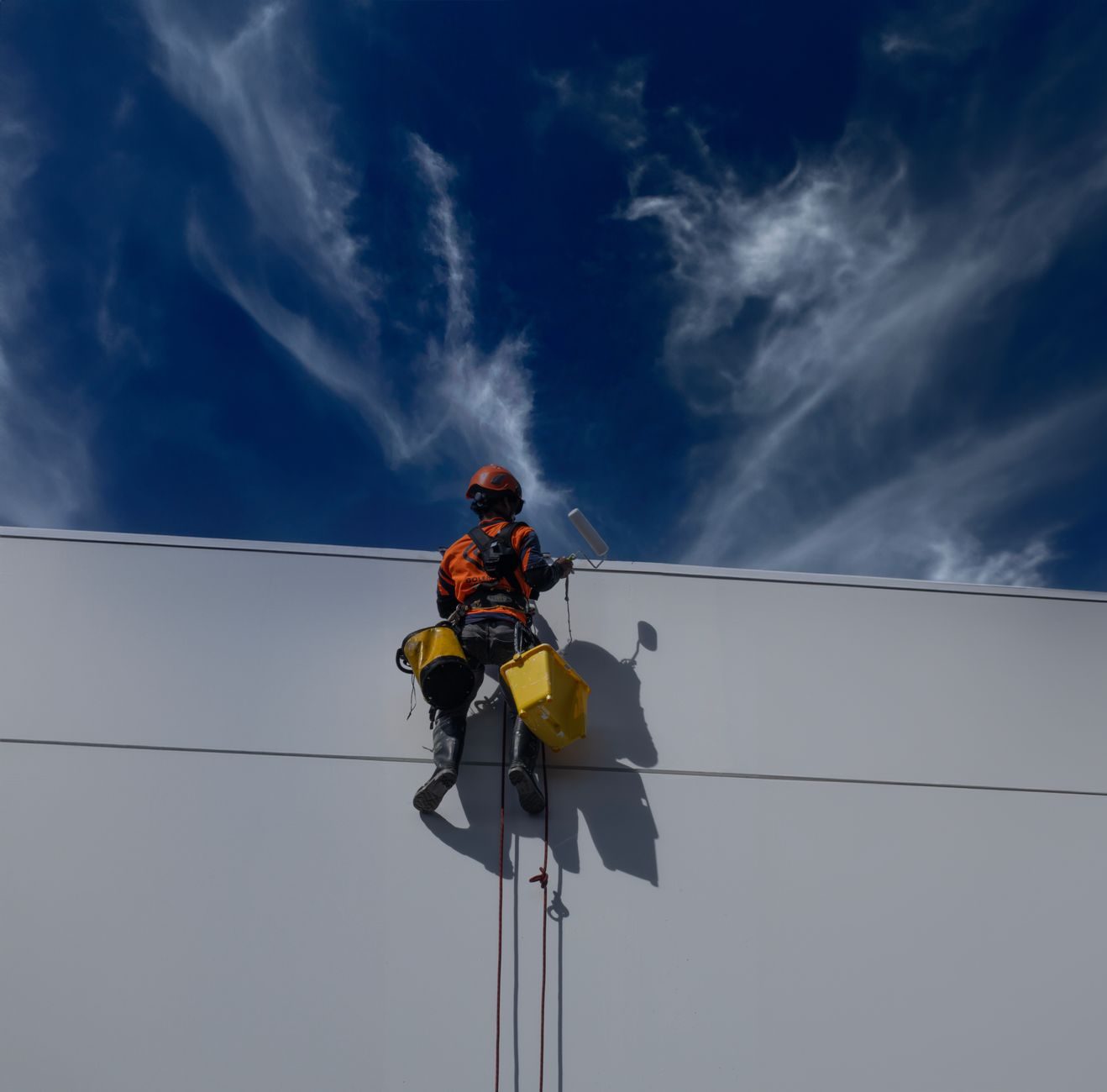
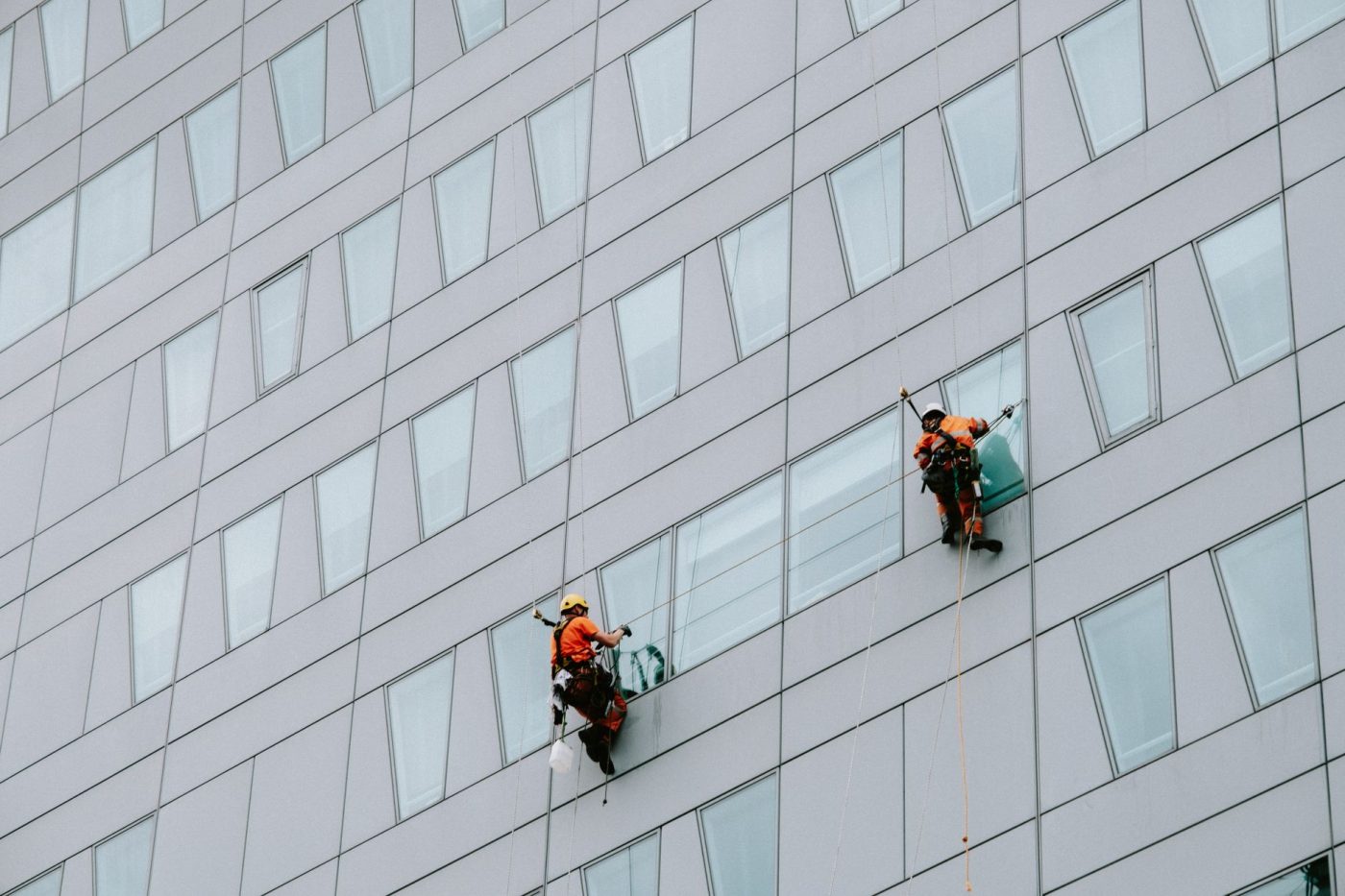
Two-storey and steep roofs add access cost. Scaffolding is sometimes the only option, but rope access is often quicker and cheaper. Under AS/NZS 1891, we work on two independent safety lines. A compliant operator will show current IRATA records and a WorkSafe Victoria SWMS before starting.
What not to do
- Skip hardware-store chicken wire and cheap gutter guard. It flexes and leaves gaps.
- Don’t screw mesh into panel frames. It can crack frames and void warranty.
- No poison baits. They carry legal risk in Victoria and dead birds in the roof are worse.
- Don’t leave a loose corner. Pigeons will find the soft spot first.
Fixing pigeons under solar usually costs less than replacing cracked tiles, corroded rails, and lost output. Rope Access Melbourne is based at 120 Hotham Street, St Kilda East VIC 3183 and works across the city with IRATA-certified technicians. If pigeons have moved in, get the array cleaned and the gaps closed before the next spring push.
Frequently asked questions
How much does bird proofing solar panels cost in Melbourne?
A fitted mesh skirt on a typical 6-10 kW array usually lands between $900 and $2,500. Spikes add $20–$50 per metre, and perimeter netting $600–$1,800. Final price depends on pitch, tile type, access, and how dirty the array is.
Can i install bird mesh around solar panels myself?
You can, but most DIY jobs miss a corner or ridge profile and birds are back within days. Use non-penetrating clips designed for solar, never drill frames. On steep or tiled roofs, the fall risk is real - WorkSafe Victoria requires safe systems of work.
Do pigeons under solar panels reduce electricity output?
Yes. Droppings shade cells and create hot spots that drag down the whole string on many systems. Nests trap heat and raise panel temperature. A proper clean restores most lost output; mesh stops the mess coming back.
Will bird proofing void my solar panel warranty?
Not if it’s fitted without drilling frames or crushing them with the wrong clamps, and airflow isn’t blocked. Check your panel’s installation manual. We fix to battens or use non-penetrating clips made for solar arrays.