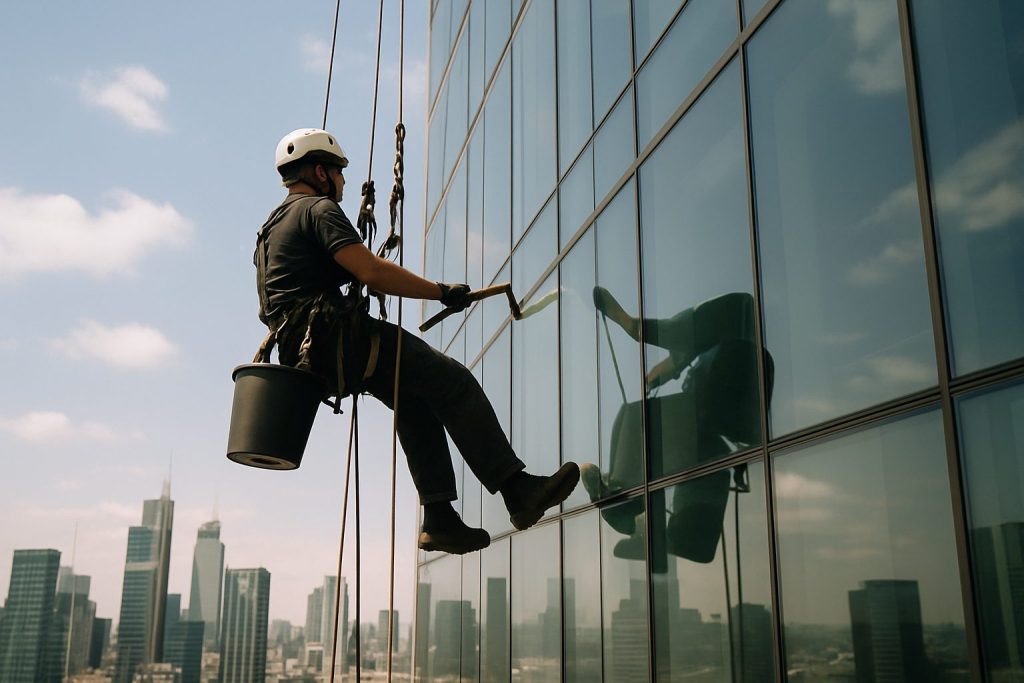
Ropes go over the edge at about half past seven. Everything before that is checking - and on a well-run job, the checking takes longer than people expect.
A high-rise window clean from ropes has a fixed order: gear, anchors, paperwork, ground zone, then the drop. Skip a step and you find out about it twenty storeys up, which is the wrong place to find out about anything.
What happens on the roof first
Every anchor point gets inspected before anyone clips in. On most Melbourne towers these are engineered roof anchors or davit arms, each with a certification tag and a date on it. AS/NZS 1891 sets the inspection regime; we log the building, the anchor number and what we found.
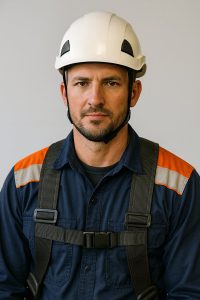
Then the gear. Ropes get run through gloved hands along their length, looking for cuts, glazing and soft spots. Harness webbing gets checked at the stitching. Carabiner gates should snap shut, not drift. Anything doubtful goes back in the van rather than over the edge.
The paperwork is a Safe Work Method Statement written for that building - not a template with the address changed. It covers the wind limit for that facade, fragile glazing, the exclusion zone, and the rule that every tool is on a lanyard. The building manager gets a copy before the first drop.
Ground level last: barriers, cones and a sign under the working area, with someone on the radio at the edge. On busy footpaths - Collins Street, Chapel Street - the barrier is only half the job. People walk around barriers while looking at their phones. Somebody has to watch for that.
The drop
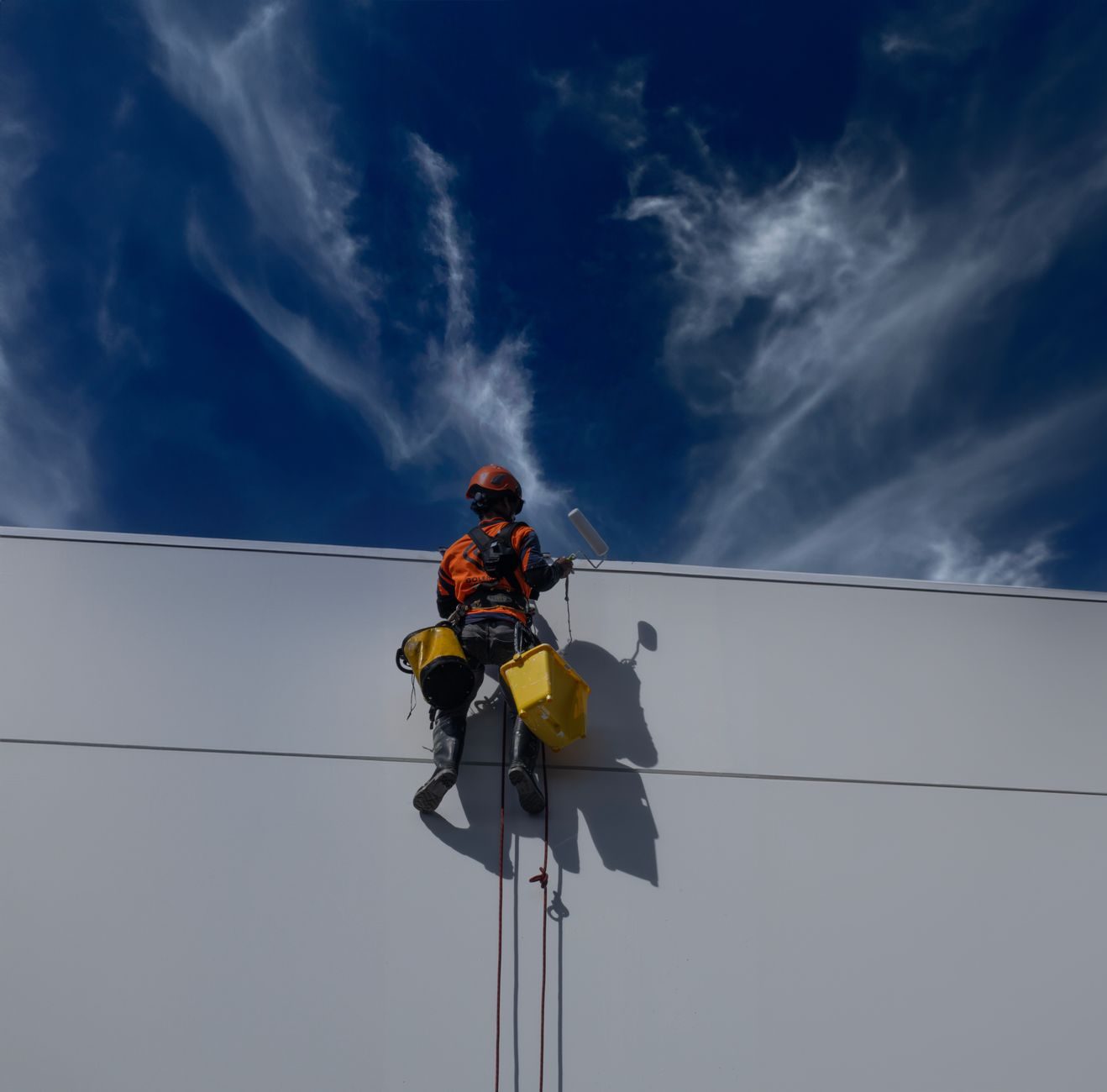
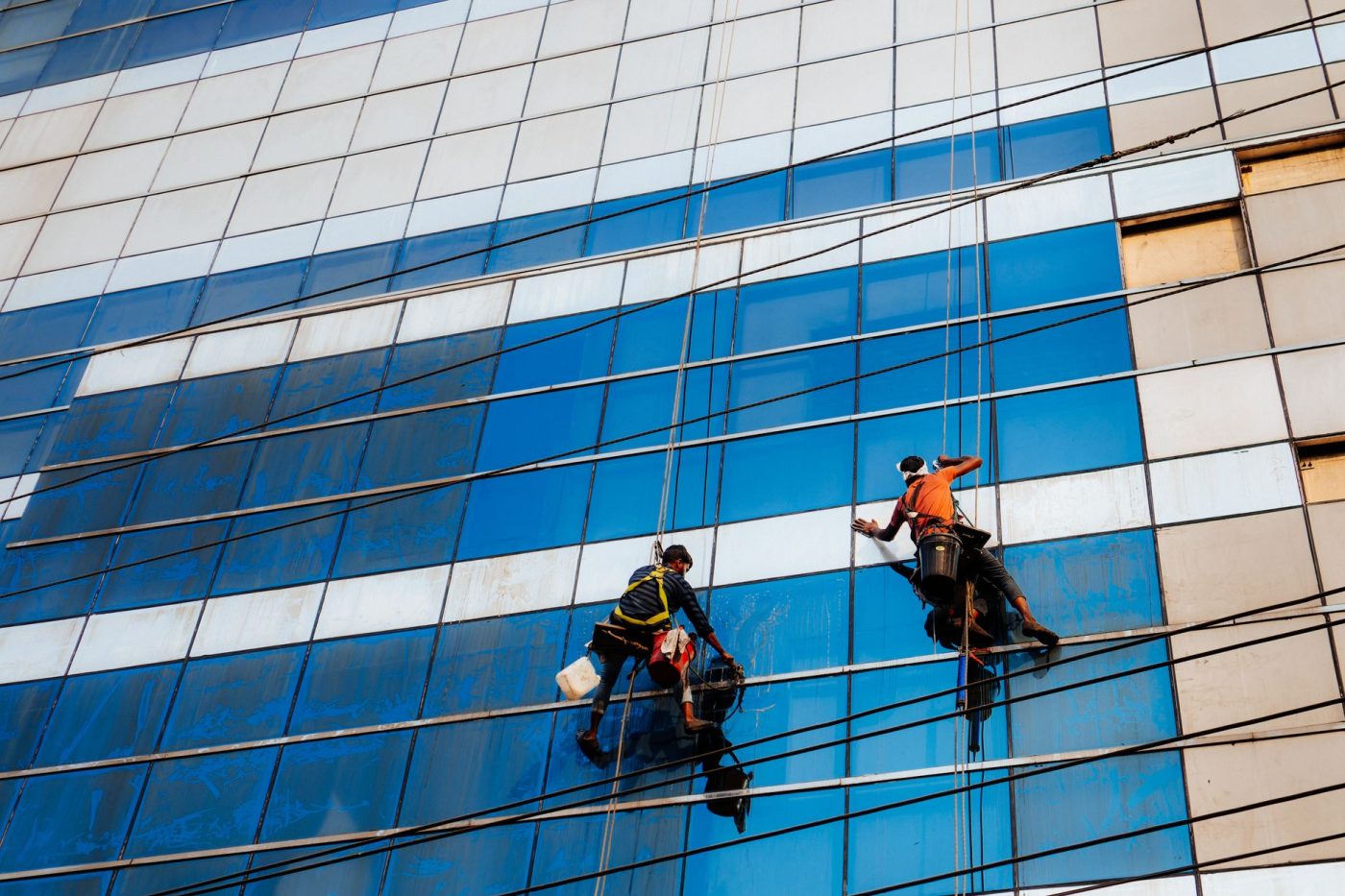
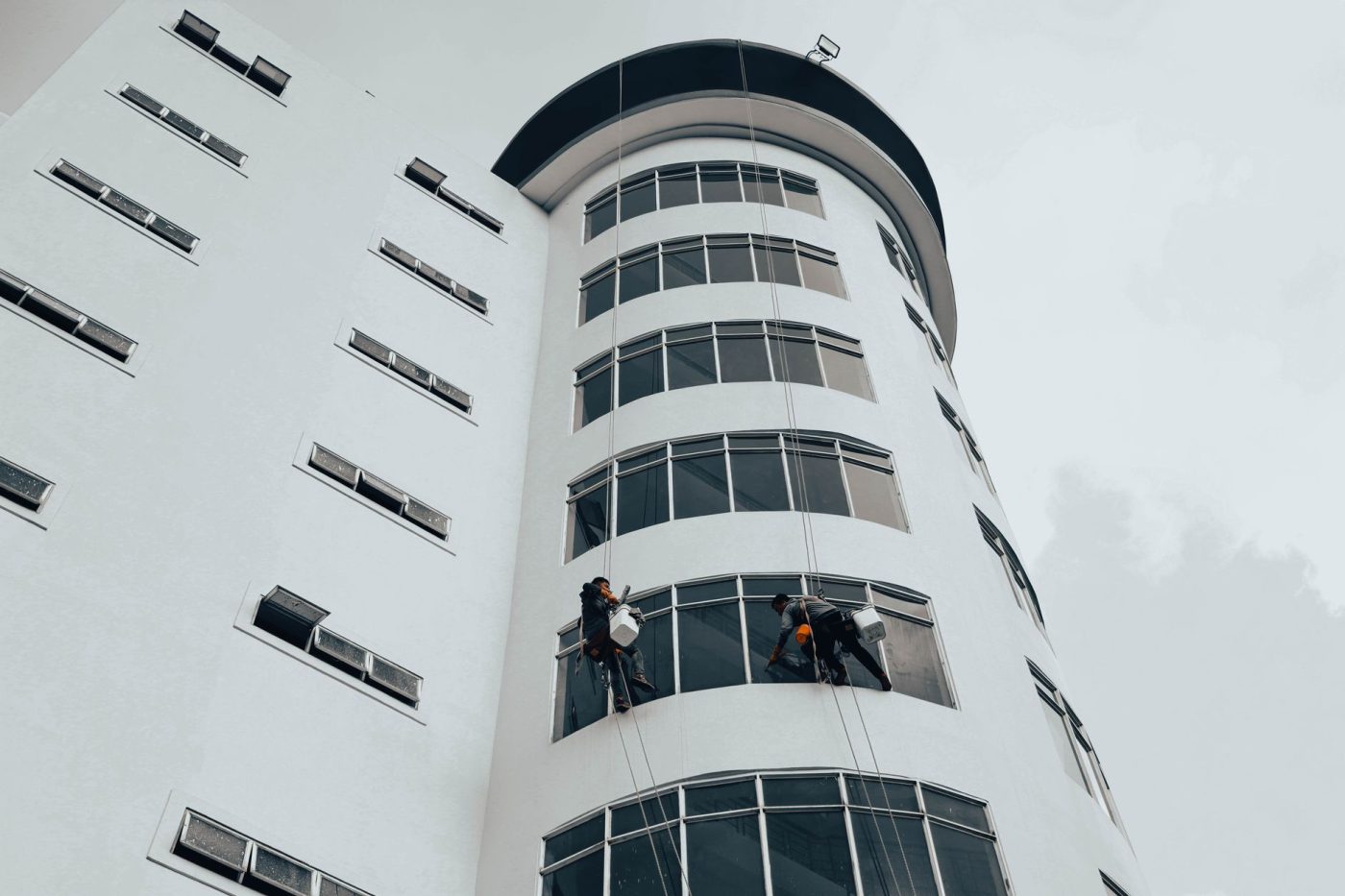
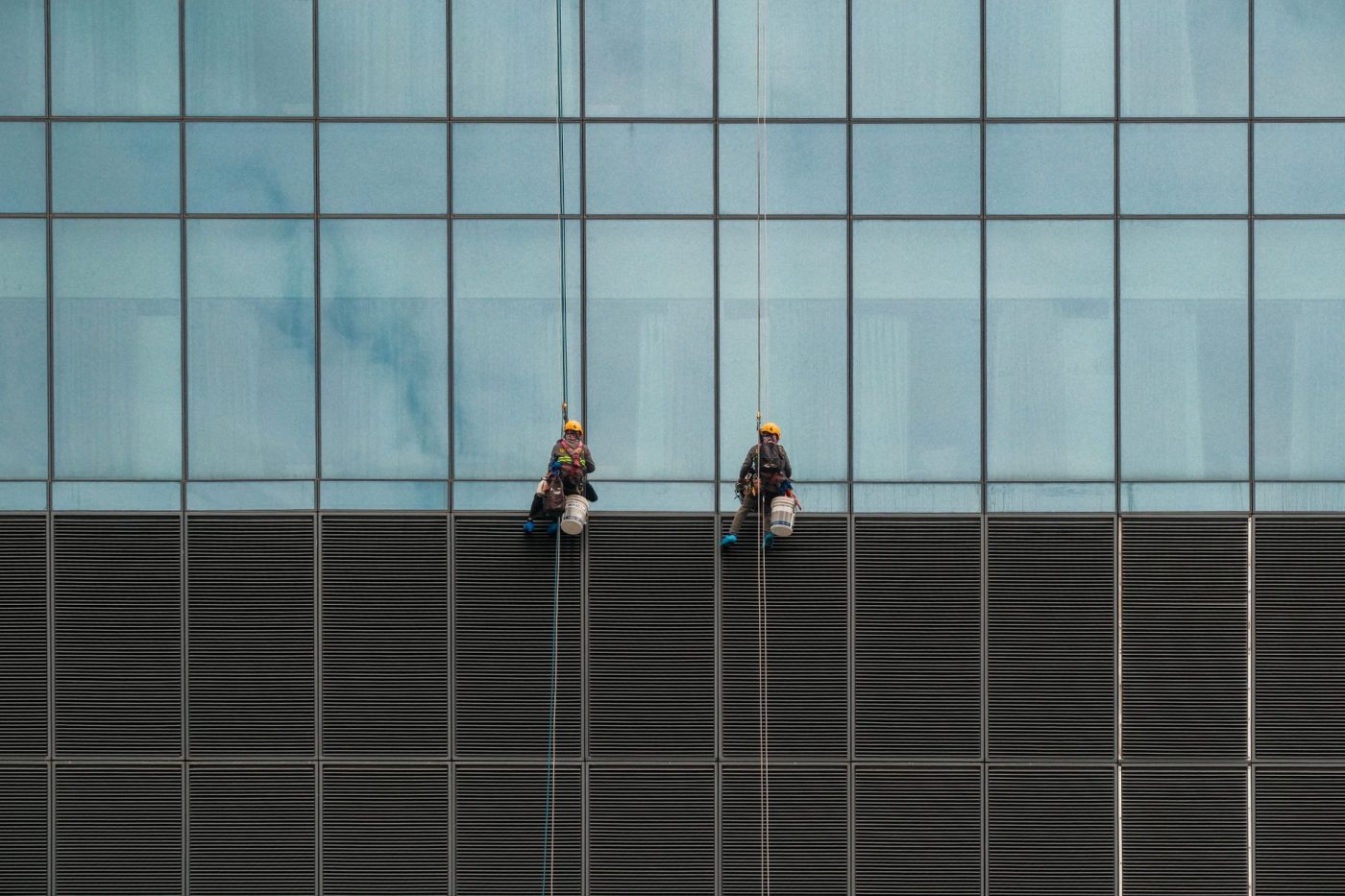
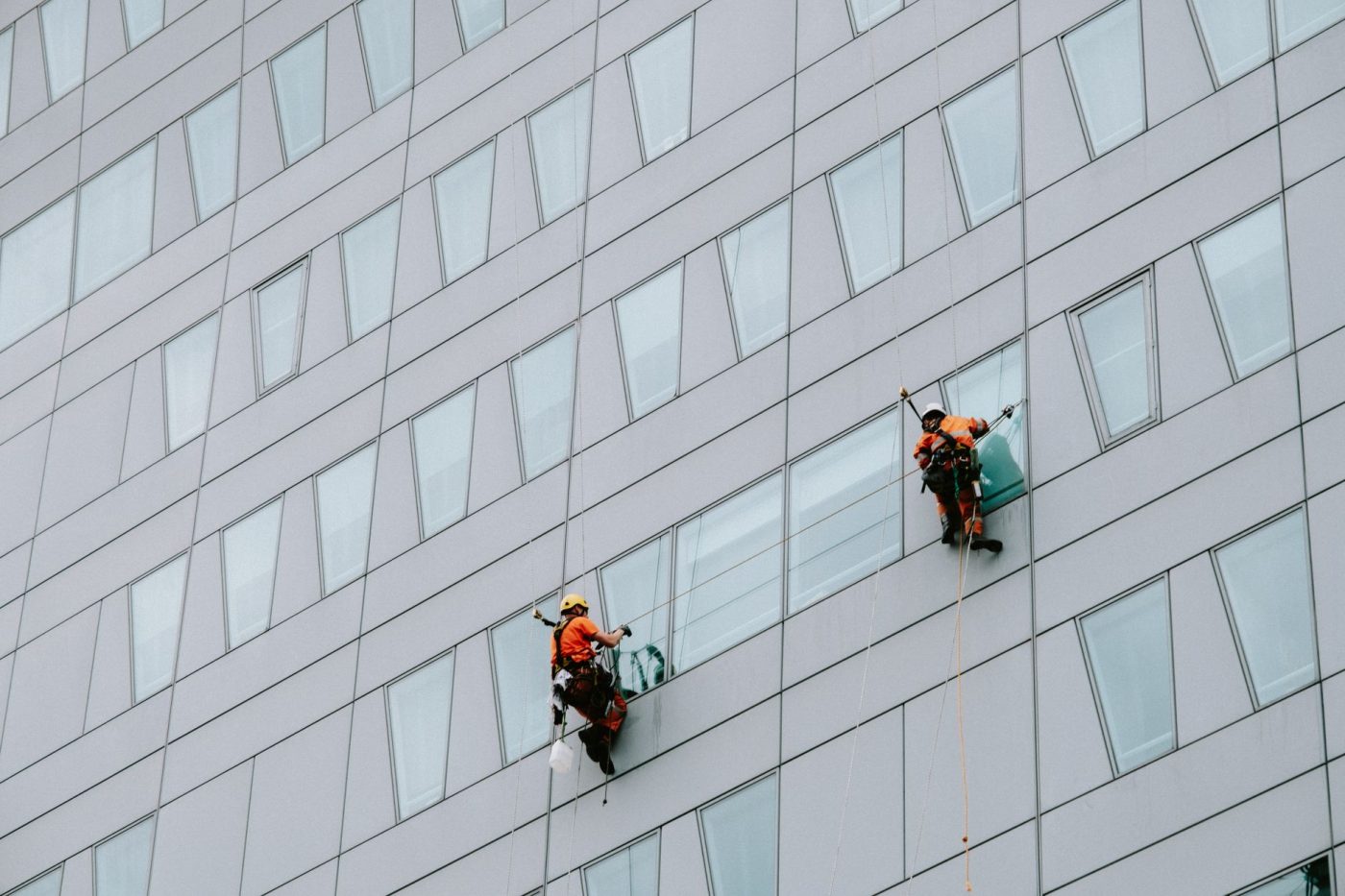
Two rope access technicians usually work on separate lines with a third person at the top. Each technician is on a working line and a backup line, both independently anchored. The descender controls the speed; the backup device catches if anything on the working line lets go. That redundancy is the whole idea, and it is why a fall on ropes is a paperwork event rather than a funeral.
A controlled descent down a 25-storey facade takes eight to twelve minutes. There is no reason to go faster. The aim is a straight, repeatable line down each column of glass so nothing is missed and nothing is done twice.
We start at the top for the obvious reason: dirty water runs downhill. Work upward and you streak the glass you just finished. Each panel gets three passes - wet it and let the salt and traffic film soften, scrub with a microfibre pad, then pull the water off with a squeegee and detail the edges and frames.
Why the water matters
Melbourne tap water carries calcium and magnesium, and closer to the bay it picks up salt. Let it dry on glass and it leaves white spotting. On a hot afternoon in Port Melbourne the glass dries before you have finished the panel, and those marks bake in.
So the water is deionised - minerals stripped out, so it evaporates and leaves nothing behind. Either the building’s tap feeds a deionising tank at ground level, or we bring our own system. On the rope itself the kit is small: pressurised bottles and a pump line rather than a full pole rig. On a 30-degree day, keeping the glass wet long enough to work it is half the skill.
Wind decides the day
Wind is the variable that runs a Melbourne facade job. A Docklands drop can start calm at ten and be unworkable by eleven when the bay breeze arrives. Above roughly 40 km/h at roof level we stop dropping, and earlier than that on exposed corners or in the gap between two towers, where the wind speeds up and starts pushing a hanging rope sideways.
We also come off the ropes for lightning anywhere nearby, and for rain heavy enough to make the glass slick. The exact limit is written into the SWMS for that building, because a sheltered courtyard facade and an exposed south-west corner are not the same job. WorkSafe Victoria expects site-specific controls, not a number copied from the last site.
| Wind at roof level | What happens |
|---|---|
| Up to 25 km/h | Normal work |
| 25–40 km/h | Shorter drops, more caution on corners |
| Above 40 km/h | Drops stop, tools secured |
When we pause, the building manager gets a call. We do not pack up and invoice for a half day - we wait, because the wind in this city usually drops again.
What it costs, roughly
For a small to mid-sized residential building, high-rise window cleaning by rope access generally lands between $700 and $1,800 a visit. A six to ten storey block sits near the bottom of that. A tall bayside tower with baked-on salt sits well above it. Those numbers are indicative only - the quote follows a look at the facade, the anchor situation and how long it has been since the last clean.
Why ropes instead of a swing stage
A swing stage needs roof space, counterweights and a good deal of setup. A crane can close a lane of traffic. Rope access fits where neither of those works: the crew can be operational in about forty minutes and gone without a permit for the footpath.
The trade-off is honest enough - ropes are weather-sensitive in a way a swing stage is not. That is why Melbourne facade work gets planned around the morning, before the afternoon breeze.
The last drop
By early afternoon the east face is done. From the street the glass reads darker, which is how clean glass looks. Ropes come up, anchors get a second look, barriers come down, the base gets swept, the building manager signs off.
How often it needs doing depends on where the building stands. Bayside towers collect salt. City buildings collect soot and traffic film. Both are much easier to clean before the grime has had a year to bond to the glass - which is the real argument for a schedule rather than a phone call once the windows have gone grey.
Frequently asked questions
How much does high-rise window cleaning cost in Melbourne?
For a small to mid-sized residential building, expect roughly $700 to $1,800 a visit, depending on glass area, height, anchor access and how long it has been since the last clean. Large towers cost more. The figure is indicative - a fixed price follows a look at the building.
What wind speed stops rope access work?
Roughly 40 km/h at roof level, and less on exposed corners or between towers where the wind accelerates. The exact limit is set in the Safe Work Method Statement for that building. Melbourne breezes arrive fast, so wind gets watched all day rather than checked once.
Why use deionised water instead of tap water?
Melbourne tap water carries calcium, magnesium and, near the bay, salt. Dried on glass, they leave white spotting that is hard to shift. Deionised water has the minerals stripped out, so it evaporates clean - which matters most on sun-exposed facades that dry fast.
Does the building need to close windows or restrict access?
Windows stay shut on the working face and the ground area below is barricaded for the day. Tenants can use the building normally otherwise. We give the manager a drop schedule in advance so notices can go out to the floors we will be passing.