What is a builders clean before handover
A builders clean is the full clean of a finished building so it can be handed over in a condition fit for the new owners. It covers everything construction left behind: dust, adhesive, paint flecks, stickers, and debris in places nobody has looked at since the structure was closed in.
The clean runs in three stages, each with a different scope. Skipping one shows up at the next.
- Rough clean: removal of large debris, offcuts, packaging and protection sheets once trades finish in each area.
- Final clean: a full pass over every room, removing dust from surfaces, sills, skirtings, cupboards and fixtures.
- Detail clean: the last polish, covering marks on glass, residue on tiles, and spots the final pass missed.
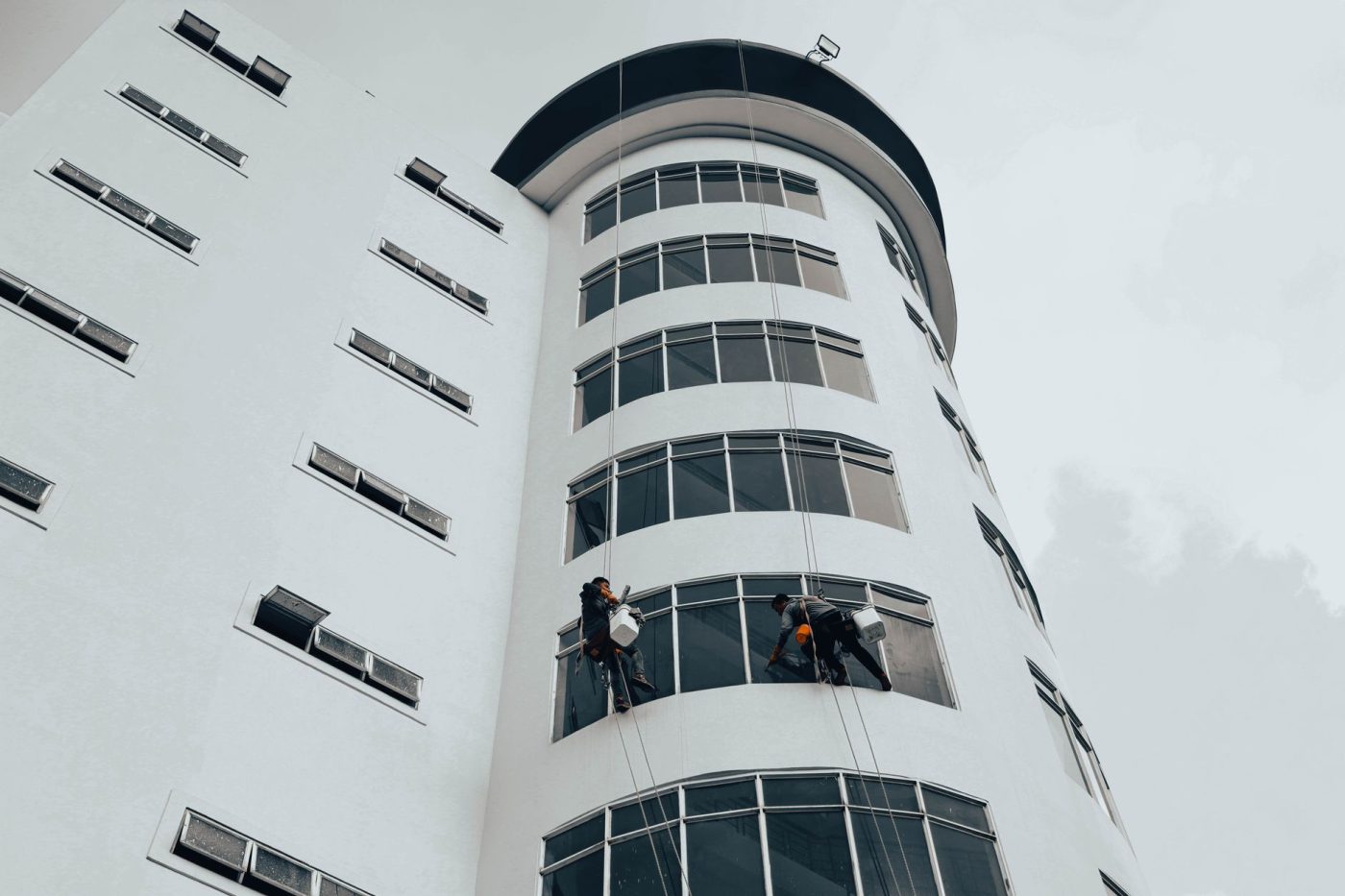
- Detail work also covers hard-to-reach spots: high glazing, balconies and facade panels.
On most Melbourne jobs the three stages are priced separately, so agree the scope of each one before work starts.
What does a builders clean cost in Melbourne
For a standard apartment tower in Melbourne, a builders clean before handover typically runs $3.50 to $7.00 per square metre of floor area, measured across all levels and common spaces. A 40-unit building of around 4,000 square metres usually falls between $14,000 and $28,000. Smaller jobs on a single floor or a townhouse site come in at the lower end of the range, while high-rise work with difficult access pushes the price higher.
Several things affect the cost. Height is the biggest factor. Work above three storeys needs rope access or an EWP, and that adds labour and equipment charges. Heavy post-construction dust, adhesive residue on windows, or render splashes on aluminium frames also increase the hours. If the clean must happen in stages as each level is handed over, the repeated setup costs more than doing the whole building in one run. The contract usually states who pays: either the builder wears it as part of the defects liability period, or the owners corporation funds it from the maintenance budget if the handover has already occurred.
How long should the clean take before handover
A small townhouse job takes one to two days. A mid-rise apartment building of 20 to 40 units typically needs three to five days with a crew of four to six cleaners. A tower above 10 storeys can run one to two weeks, mostly because of the external glass and the common areas spread over many levels.
The bigger factor is condition, not size. A site where trades have already done their own tidy-up cleans each week needs far less time than one where the clean is the first proper clean after completion. Plaster dust in every cornice, stickers on every window and paint flecks on tiles can double the labour.
Plan the finish date, not just the start. A practical rule: finish the clean at least two days before the practical completion inspection. That buffer gives you time to walk through, mark defects on the report, and have the crew return for touch-ups without holding up handover. If the clean is still running on inspection day, you will be signing off rooms the cleaners have not finished.
What do site managers get wrong most often
The biggest mistake is booking the clean too close to handover. If the clean starts two days before settlement and snagging is still underway, the work has to be redone. Plaster dust settles on every surface within minutes of sanding, and a painter touching up architraves leaves dust on the skirtings you just paid to wipe down. The clean should start only after all trades have finished, not while they are still walking through.
Treating windows as optional is the second most common error. A full builders clean includes removing stickers, labels and construction residue from every pane, frame and track. When the contract says "internal clean only" and the windows are not specified, they get left. The first time an owner looks out through a spotted window, the defect notice follows.
External surfaces above ground level are often skipped because nobody on site has the gear. High windows, facade panels, balcony soffits and roof-level glazing stay dirty. The cleaner did not forget. The scope was written as though the building has only two storeys. On a twelve-level tower, the top four floors stay untouched unless access is planned from the start.
Other recurring errors:
- assuming the window cleaner will handle the builders clean, when the two are different jobs with different equipment and a different price
- leaving protective film on glass and frames too long, so the adhesive bakes on and needs solvent or scraping to remove
- not checking that power and water are connected on every floor before the crew arrives
- signing off the clean at ground level without walking the upper floors and the roof
- treating the clean as a single visit when a large building often needs a rough clean, then a detail clean after snagging
Who cleans the parts you cannot reach from the ground
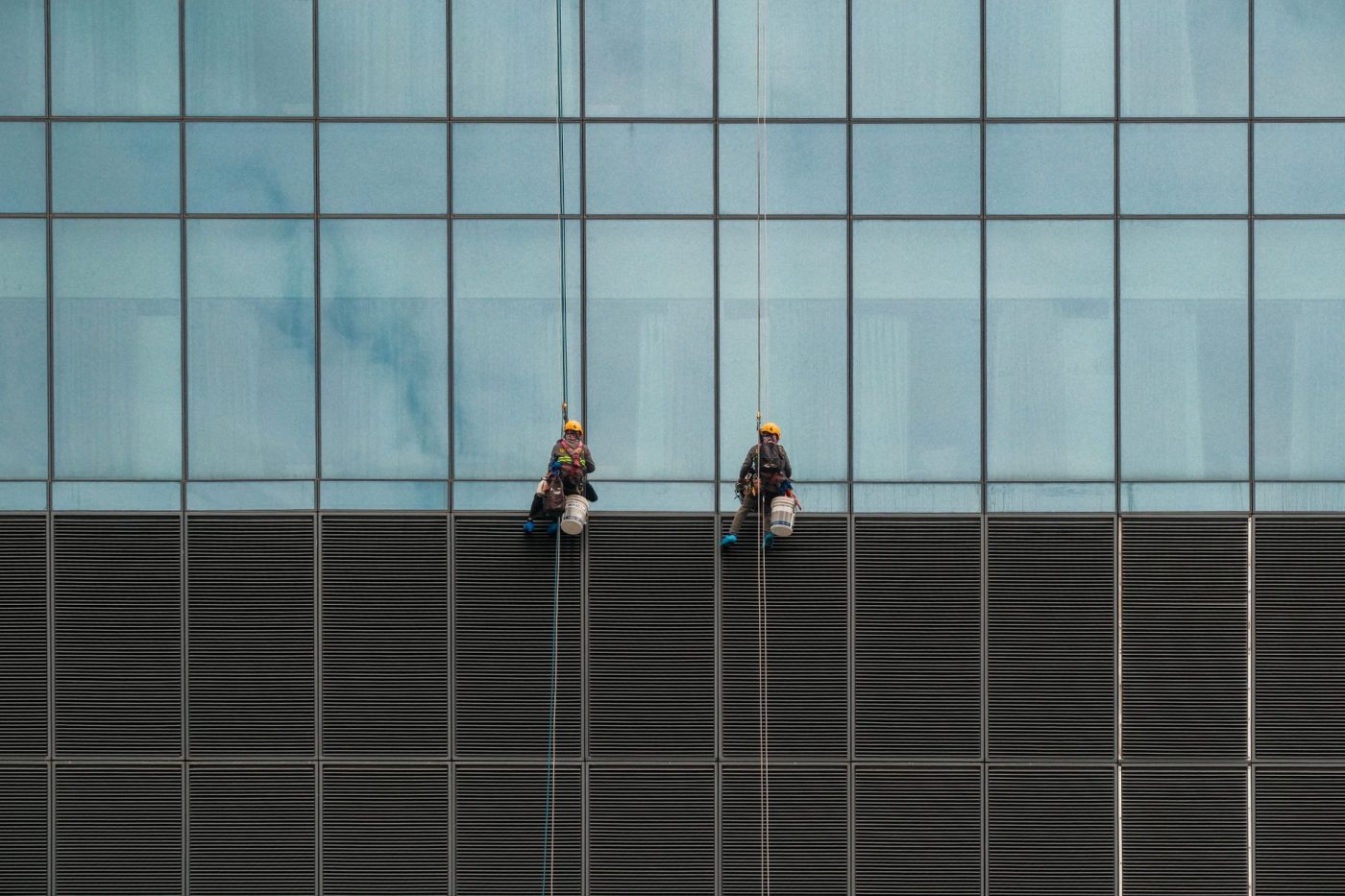
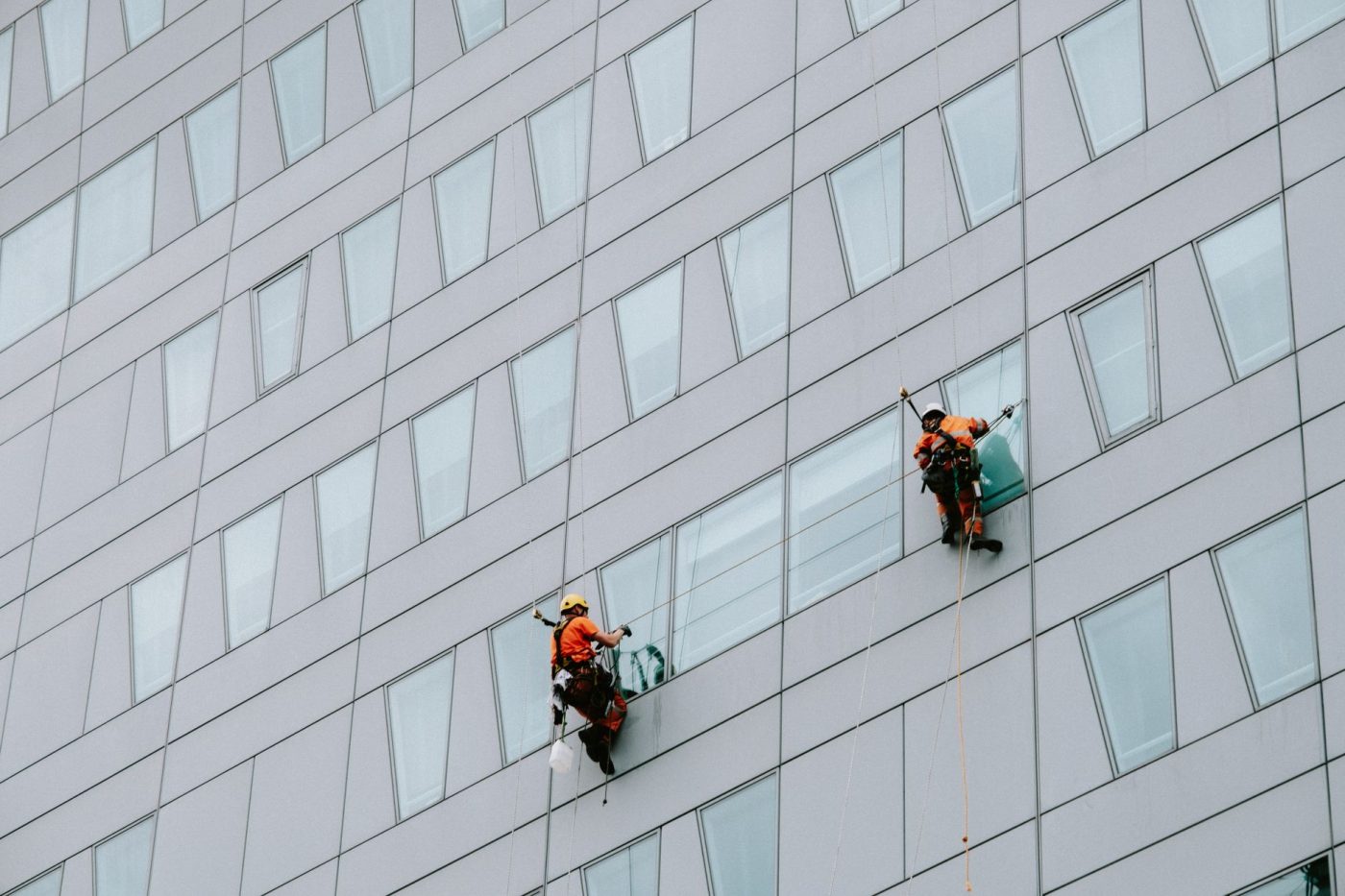
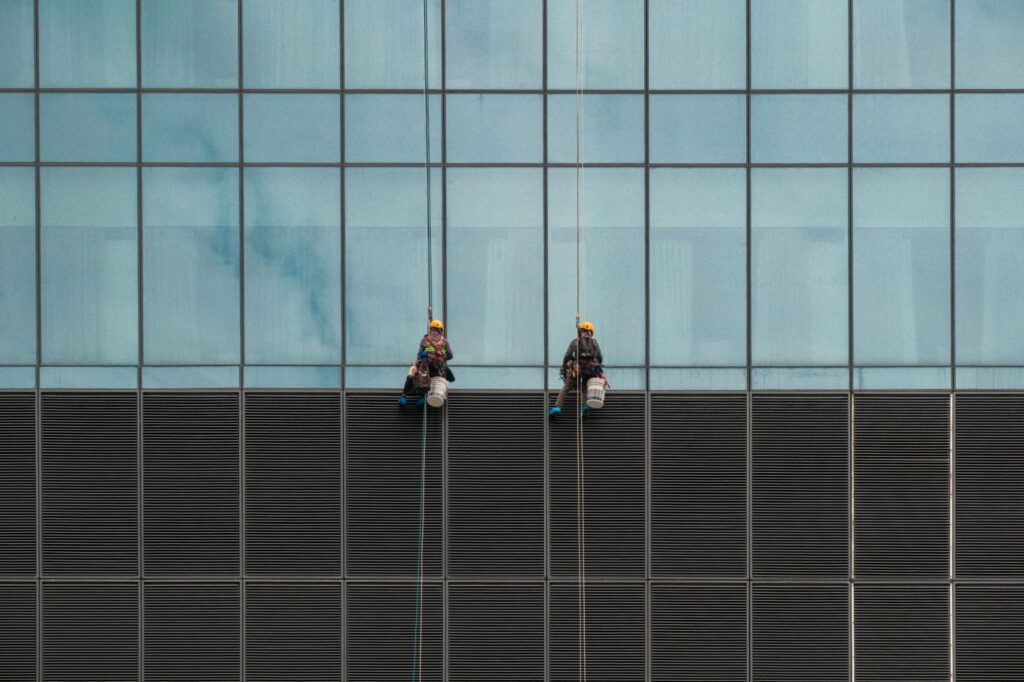
A standard clean crew works off ladders and platforms, which reach roughly 4 to 5 metres. Above that, high-rise towers need rope access. A technician in a harness descends the facade on ropes and cleans glass, frames and cladding that no ground-based crew can touch. For a typical Melbourne tower of 8 to 20 storeys, this is the only practical way to finish the facade before handover.
The usual mistake is booking the builders clean first and discovering the high-level work afterwards. Balconies collect mortar splashes, dust settles on upper glazing, and paint overspray lands on glass that sits well above any ladder. If those items are found after the main crew has left, the clean must be repeated in stages and the handover date slips.
Rope access cleaning must be done by technicians certified under IRATA (the International Rope Access Trade Association). The OHS Regulations 2017 in Victoria also cover the work, setting requirements for working at height and fall prevention. Any contractor on your facade should confirm both in writing before anyone goes over the edge.
What happens if the clean is not done properly
A practical completion inspection will pick up construction dust and debris straight away. The building surveyor or the client's representative walks through with a defects sheet, and anything that should have been cleaned but was not gets listed. That means a failed inspection.
You then have to bring the cleaners back, which delays handover. If the delay pushes settlement past the contracted date, liquidated damages can apply. On a medium-size apartment project in Melbourne, one extra week can cost tens of thousands of dollars in holding costs and penalty clauses.
There is also the dispute that follows with the owners corporation. Common property handed over with slurry stains on the podium, dust in the lift shafts or render splatter on windows becomes an immediate defect claim. The OC will demand rectification at the builder's cost, and that work costs more after residents have moved in because access is restricted and hours are limited.
What should you check before signing off the clean
Walk the job with the cleaning contractor before you sign anything. Do the inspection in daylight, not under work lights, because smears and streaks on glass only show up in natural light. Take photos of anything you want fixed and put the defects in writing with a date for the re-clean.
- Run a finger along window sills, door frames and skirting to find dust the vacuum missed.
- Check the top panes of ground-floor windows and any glass you can reach, since low-level quality usually predicts high-level quality.
- Look at balustrade glass and stainless handrails for adhesive flecks and paint spots.
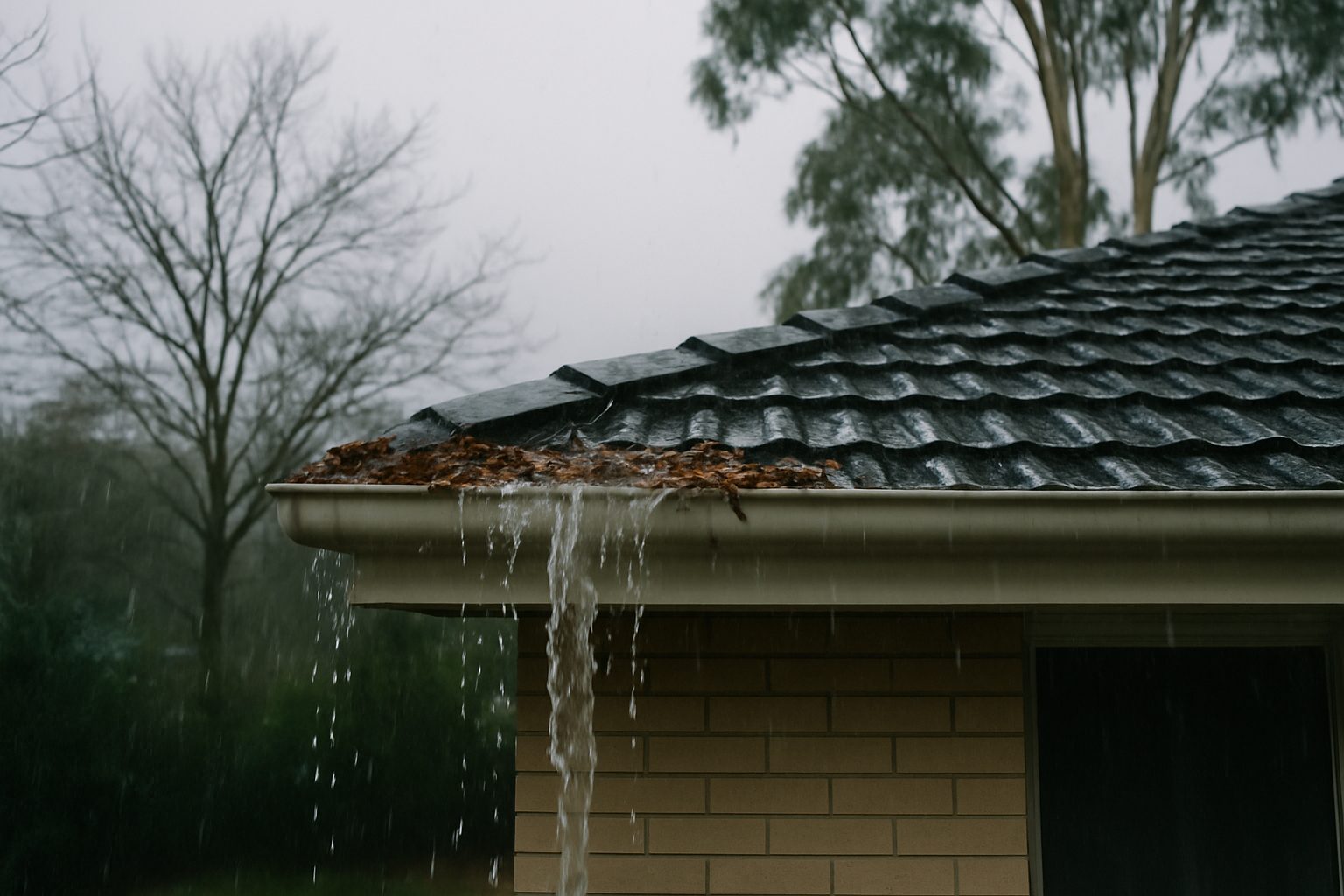
- Flush every drain on balconies and check for builder's grit sitting in the grate.
- Open windows and doors to check tracks, because grit in a track scratches glass every time it slides.
- Inspect garage walls and lift lobbies for scuffs from trolleys and machinery.
Hold back part of the payment until defects are cleared, and set a re-clean window of two to three days so the schedule does not slip. If the high-level glass or facade needs checking beyond what you can see from the ground, that is a rope access job. We are happy to walk the facade with you and quote the work.
FAQ
Is a builders clean the same as a final or detail clean?
No. A rough clean happens during the build, a final clean prepares the site for inspection, and a detail clean is the last pass that gets everything ready for handover. Most disputes come from one contractor being asked to do all three for one price.
Who pays for the builders clean?
In most cases the builder pays under the building contract, so the cost sits in the contract price. Check the contract scope before approving variations, because external and high-level work is sometimes excluded.
Can window cleaning be left until after handover?
It can, but it usually should not. Handover inspections judge the building as it looks on the day, and dirty or paint-spattered glass is one of the most common reasons an inspection fails. Cleaning high-level glass later also costs more once access equipment has left the site.
When should the clean be booked?
Book it when the finishing trades are scheduled, not after they finish. A clean booked only a day or two before inspection leaves no room for trades to return and fix snags, which is the most common cause of a delayed handover.