Why clean gutters before the storm season
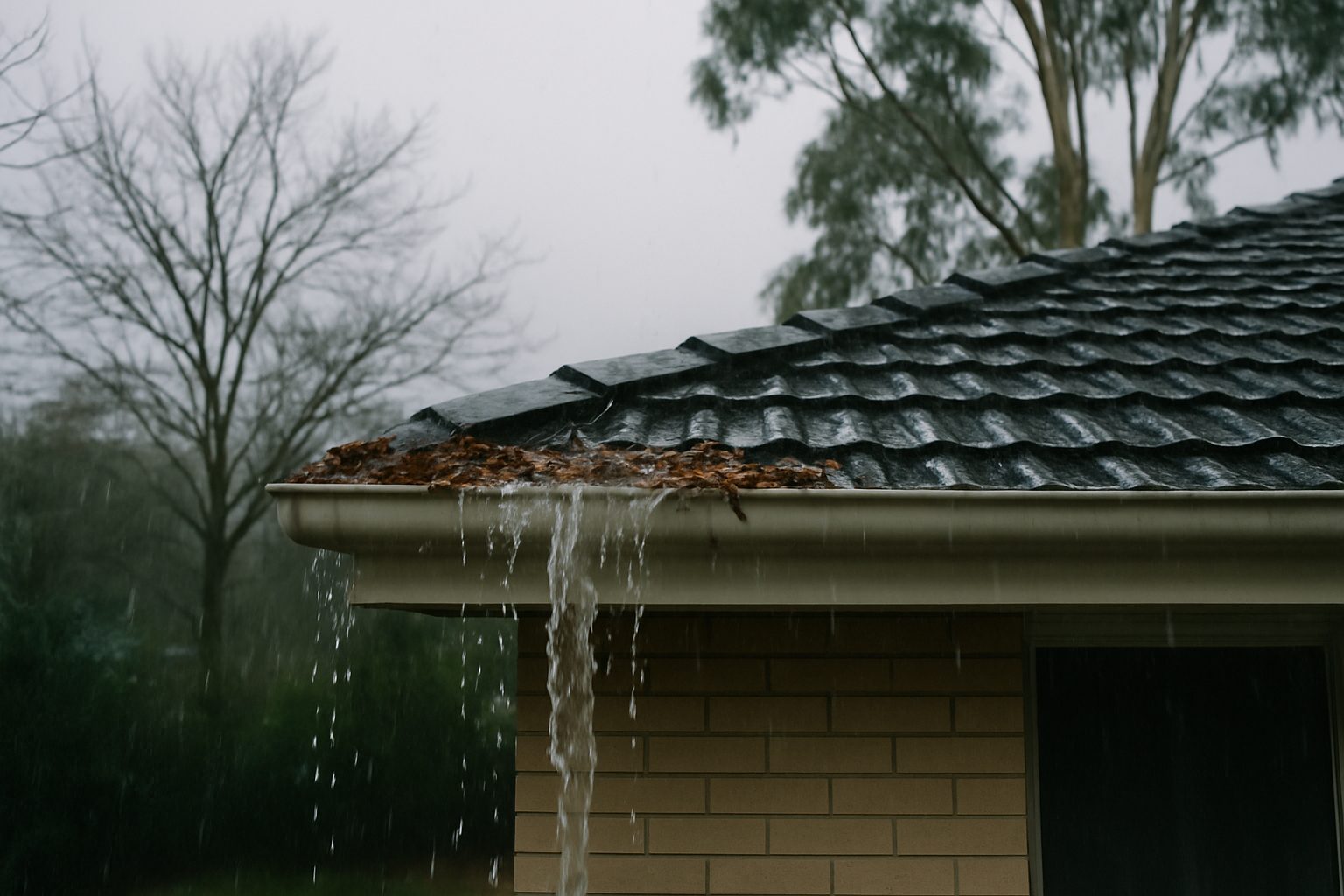
Melbourne storms rarely drop steady rain. A February cold change can dump 20 mm in half an hour, and a gutter full of leaves and gum seeds cannot move that volume. The water backs up, spills over the fascia and runs down the facade instead of going down the downpipe.
On a tall building that overflow shows up in the wrong places. Water finds weep holes, window frames and parapet joints, then appears as stains on the facade or damp patches on top-floor ceilings. By the time owners see the stain, the leak has been running for weeks.
You should book the work by October. Severe thunderstorm warnings in Melbourne cluster from November through March, and gutter crews book out fast once the first big storm hits. A building cleaned in spring goes into summer with downpipes that can take a 30-minute downpour. If you clean after the first flood, you pay for water damage as well as cleaning.
- Clear leaves, seed pods and silt from every gutter run and outlet.
- Flush each downpipe so a blockage inside the pipe shows up now, not during a storm.
- Check that overflow points and parapet drains actually drain.
- Book the work for September or October, before the crew schedules fill.
What happens if the gutters are left blocked
Blocked gutters let water spill over the sides instead of flowing to the downpipes. On a tall building that overflow runs down the facade and finds its way inside through window flashings, cracked render or balcony door thresholds. The first sign is usually a stain on the ceiling of the apartment below, or a damp patch in a lift lobby. By the time you see it, water has already been travelling through the wall cavity for weeks.
The damage follows a clear order, and the costs climb quickly:
- Water enters the wall cavity and soaks plasterboard, insulation and carpet. Drying and patching a single ceiling typically costs $400 to $800, but a lift lobby with damaged finishes can run into several thousand.
- Standing water in steel box gutters accelerates rust. A rusted box gutter on a high-rise needs a roofing contractor to cut out and replace sections, which costs from $3,000 upward depending on access and length.
- Persistent damp behind cladding or render leads to mould inside apartments. Mould remediation in a single unit starts around $1,500 and rises sharply if it has spread into multiple rooms or common areas.
- If the insurer traces the damage to blocked gutters, they may decline the claim on the grounds of poor maintenance. The owners corporation then bears the full cost of repairs, plus the ongoing premium increase.
This damage does not happen gradually. One heavy downpour with blocked gutters can push enough water inside to trigger two or three of these problems at once. The repair bill lands in the same financial year as the storm. The committee then has to explain to owners why a maintenance item turned into a six-figure special levy.
How much does it cost on a tall building
Most gutter cleaning on low-rise buildings is priced per metre of gutter line. Single and double-storey jobs typically run $6 to $12 per linear metre, so a small apartment block with 40 metres of gutter might cost $300 to $500. Once a building goes past three or four storeys, most contractors move to hourly or day rates because access becomes the main cost. Rope access crews on multi-storey buildings typically charge $150 to $250 per technician per hour, with a minimum call-out of half a day.
Rope access changes the price in two directions. You pay for IRATA-qualified technicians and the rigging time at the start and end of each shift, which pushes the hourly rate up. But you avoid scaffolding hire, which on a ten-storey building can add thousands of dollars per week. You also avoid the road closures and council permits an elevated work platform often needs on narrow streets. For anything above about four storeys, rope access is usually the cheaper option overall.
Three things push the price up. Gutter guards have to be lifted and refitted, which can double the labour time. Internal downpipes that are already blocked need flushing with water or a drain auger, and that is often quoted separately. And hard access, such as a roof with no anchor points or a side elevation over a busy laneway, means more rigging time and sometimes a second technician.
How long does the work take
The cleaning itself is usually one day on a low-rise building up to three storeys. For a tower, expect two to four days on the ropes. The biggest variable is the lineal metres of gutter, not the building height. A crew of two can cover 80 to 120 metres of gutter in a day, depending on how choked the gutters are and how many downpipes need clearing.
There is also one or two days of preparation before anyone goes over the edge. That covers the safety plan, a site-specific risk assessment, and notifying the council or the building manager if footpath closures are needed. Most committees allow a week from go-ahead to completion so the paperwork does not rush the job.
How often should gutters be cleaned in Melbourne
Plan on at least one clean a year, and twice a year if large trees overhang or stand within about 10 metres of the building. Do the second clean in autumn, before the wet months set in, and the first in spring once the tree canopy has finished dropping seed and leaf. A building with no tall trees nearby can usually sit on the single annual clean.
Leafy inner areas such as Hawthorn, Elsternwick or Fairfield fill a gutter in a single season. Eucalyptus leaf and bark strip sheds year round, and it mats into a solid plug at the outlet faster than most people expect. On those buildings, you need the twice-yearly schedule. A blocked downpipe that overflows for two winters will cost more to put right than the second clean would have.
Add one more habit to the schedule: a check after every major storm. That does not mean a full clean. Someone with a rope access team on site, or a good zoom photo from the ground, can confirm the downpipes are still running and nothing has been torn off. If water spills over the gutter edge during rain, book the clean then and there rather than waiting for the next scheduled visit.
Why rope access instead of scaffolding or an EWP
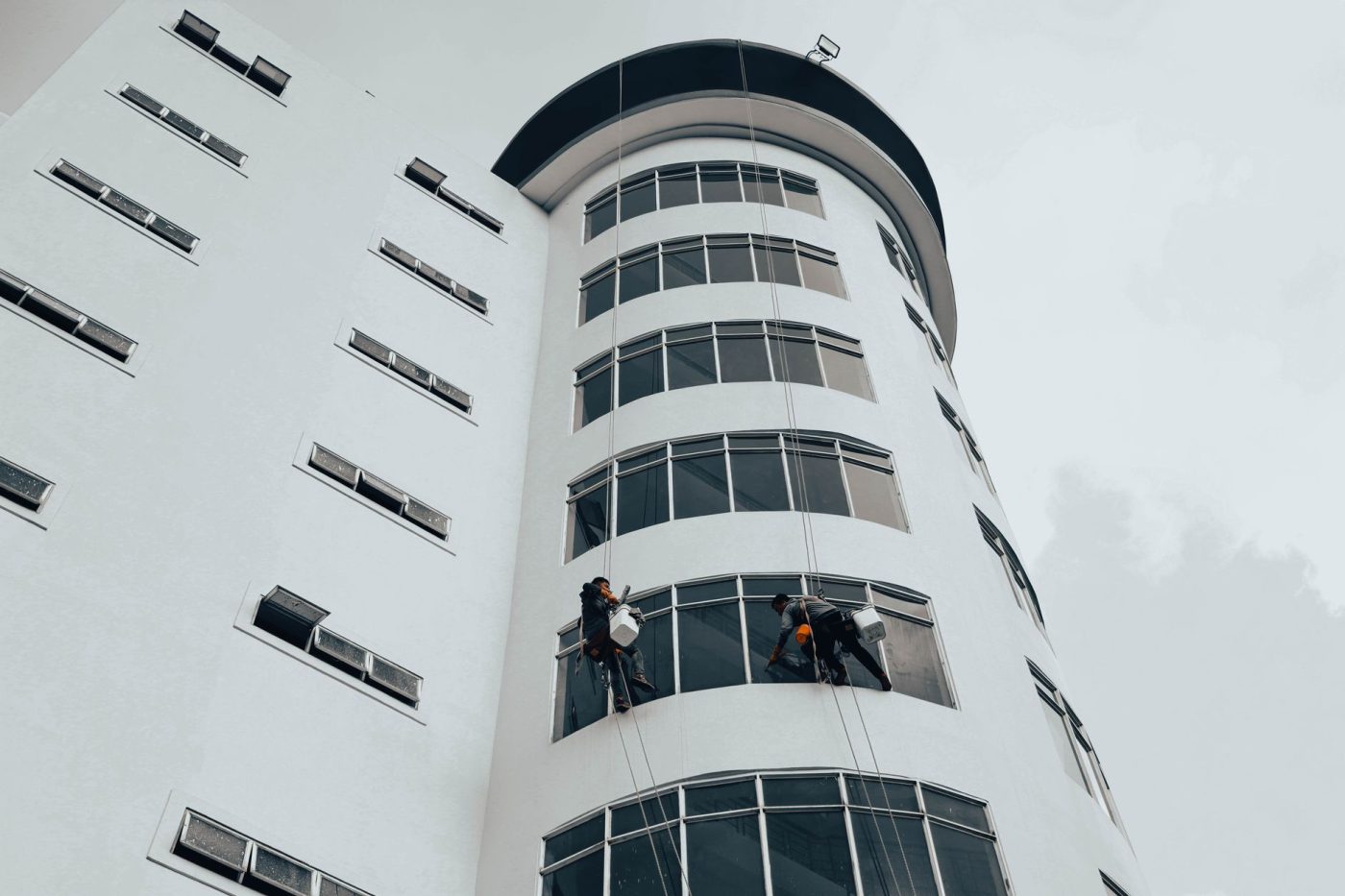
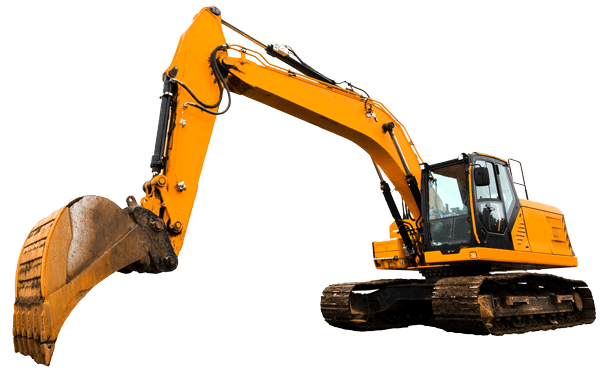
On a tall building the difference comes down to three things: cost, setup time and how much the work disrupts residents. Scaffolding takes days to erect and days to dismantle. For a 15-storey block the hire alone can run to several thousand dollars before a single gutter is touched. An elevated work platform, or cherry picker, needs a flat hardstand and clear overhead access. Many Melbourne apartment towers sit over underground parking or have narrow side setbacks. Getting a machine close enough to every gutter is often impossible.
Rope access skips the hire, the traffic management and the resident complaints about blocked walkways. Two IRATA-qualified technicians arrive, rig their lines from the roof anchors and start work within an hour. There is no machinery noise at ground level and no balconies blocked by scaffold tubes. The system works under AS/NZS 1891.4, which sets the bar for industrial rope access in Australia. Every technician carries their IRATA certification card, renewed every three years after independent assessment. The gear is checked daily and the whole setup is inspected by a third party every six months.
For most high-rise gutter and roof work the choice is not really a choice. If a cherry picker cannot reach and scaffolding costs more than the cleaning itself, rope access is the only practical option. When the building has permanent roof anchors the work is straightforward. If anchors need to be installed first, that adds a day and the cost of an engineer's design, but it is a one-off expense that makes all future maintenance cheaper.
What to do next
Storm season in Melbourne runs from roughly September through to March. Work booked in July or August gets done before the first heavy rain. Work booked in October competes with everyone else who waited.
- Book an inspection for late winter, ideally before the end of August, so there is time to schedule the clean.
- Ask for a written scope with photos of the problem spots: downpipe inlets, valley gutters, box gutters and any ponding areas on the roof.
- Check the contractor holds current public liability insurance and IRATA certification for the rope access technicians on site.
- Put gutter and roof cleaning in the annual maintenance plan with a set frequency, so the cost is budgeted rather than raised as a surprise special levy.
- Get the report from the finished work in writing, with before and after photos, for the owners corporation records.
Under the Owners Corporations Act 2006, routine maintenance of common property sits with the owners corporation, so a documented plan makes the spend easier to justify. If the inspection turns up structural rust on a box gutter or a damaged parapet, that needs an engineer's assessment before anyone quotes repairs. If you want to book an inspection or get a written scope, get in touch through the website and we will walk the roof with you.
FAQ
Can gutter cleaning be done in winter in Melbourne?
Yes, but rain and wind stop rope access work on the day. Most crews schedule winter jobs with a weather buffer, so book early rather than hoping for a dry week.
Does the owners corporation pay or individual owners?
The owners corporation pays for gutters and the roof because they are common property under the Owners Corporations Act 2006. The cost comes from the maintenance fund, so it should appear in the budget rather than as a special levy surprise.
Do we need gutter guards if we clean every year?
Not always. Gutter guards cut the cleaning frequency but add an upfront cost and still need checking. Buildings surrounded by large trees get the most benefit, while a clean roofline may not justify the spend.
Is rope access safe for cleaning a tall roof?
Yes, when the crew holds current IRATA certification and works to AS/NZS 1891.4. Ask for the rescue plan and anchor certification before the job starts, and check the contractor's public liability insurance is current.